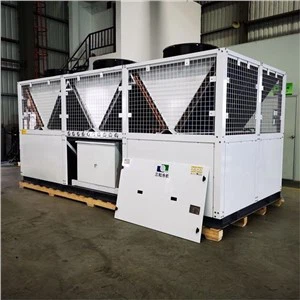
Hey there! As a heat exchanger supplier, I've been in the thick of the power plant game for quite a while. So, I thought I'd share my insights on what role a heat exchanger plays in a power plant.
First off, let's get a basic understanding of what a power plant does. Power plants are all about generating electricity. They usually use some kind of fuel - it could be coal, natural gas, nuclear energy, or even renewable sources like solar or hydro - to produce heat. This heat is then used to turn water into steam, and the steam drives a turbine, which in turn spins a generator to create electricity.


Now, here's where heat exchangers come into the picture. A heat exchanger is a device that transfers heat from one fluid to another without the two fluids actually mixing. In a power plant, heat exchangers are used in several key processes, and they're super important for the plant's efficiency and overall operation.
One of the main roles of a heat exchanger in a power plant is in the steam cycle. After the steam has passed through the turbine and done its job of spinning it, it's still hot but has lost a lot of its energy. Instead of just letting this steam go to waste, a heat exchanger called a condenser is used. The condenser cools the steam down, turning it back into water. This condensed water can then be pumped back into the boiler to be heated up again and turned into steam. This closed - loop system helps to conserve water and also makes the power plant more efficient because it reduces the amount of energy needed to heat up fresh water every time. For example, our Shell and Tube Condenser Heat Exchanger is a great option for this kind of application. It's designed to handle large volumes of steam and efficiently transfer the heat to a cooling medium, usually water from a nearby river, lake, or cooling tower.
Another important application of heat exchangers in power plants is in pre - heating the water before it enters the boiler. By using the waste heat from other parts of the power plant, a heat exchanger can warm up the water going into the boiler. This means that less fuel is needed to heat the water to the boiling point, which saves money and reduces the environmental impact of the power plant. It's like getting a head - start on the heating process. Our heat exchangers are engineered to transfer heat effectively in these pre - heating scenarios, making sure that the water reaches the optimal temperature before entering the boiler.
Heat exchangers also play a role in cooling the various components of the power plant. For instance, the generator produces a lot of heat when it's operating. If this heat isn't removed, it can damage the generator and reduce its efficiency. A heat exchanger can be used to cool the generator by transferring the heat from the generator coolant (usually a liquid like oil or water) to a secondary cooling medium. This helps to keep the generator at a safe operating temperature and ensures its long - term reliability.
In addition to the steam cycle and component cooling, heat exchangers are used in power plants that use renewable energy sources. In a solar thermal power plant, for example, heat exchangers are used to transfer the heat collected from the sun - heated fluid (like molten salt) to water to produce steam. This steam then drives the turbine to generate electricity. Our U Type Evaporator is suitable for such applications, as it can efficiently transfer heat from the hot fluid to the water to produce steam.
In a geothermal power plant, heat exchangers are used to transfer the heat from the hot geothermal fluid (usually water or steam from underground) to a secondary fluid in a closed - loop system. This secondary fluid can then be used to produce steam and generate electricity. Our Flooded Type Shell and Tube Evaporator is a great choice for geothermal power plants, as it can handle the high - temperature and high - pressure geothermal fluids and transfer the heat effectively.
The efficiency of a heat exchanger is crucial in a power plant. A more efficient heat exchanger means that more heat can be transferred with less energy loss. This directly translates into cost savings for the power plant operator, as less fuel is needed to generate the same amount of electricity. It also reduces the environmental impact of the power plant by reducing emissions.
When choosing a heat exchanger for a power plant, there are several factors to consider. The first is the heat transfer capacity. You need a heat exchanger that can handle the amount of heat that needs to be transferred in the specific process. The type of fluids involved is also important. Different fluids have different properties, such as viscosity and corrosiveness, and the heat exchanger needs to be made of materials that can withstand these properties. The size and layout of the power plant also play a role. You need a heat exchanger that can fit into the available space and be easily integrated into the existing system.
As a heat exchanger supplier, we understand these requirements and offer a wide range of heat exchangers that are designed specifically for power plant applications. Our team of experts can work with you to determine the best heat exchanger for your power plant based on your specific needs and requirements. Whether you're building a new power plant or upgrading an existing one, we've got the right solution for you.
If you're in the market for a heat exchanger for your power plant, don't hesitate to reach out. We're here to help you improve the efficiency of your power plant and reduce your operating costs. Contact us for more information and let's start a conversation about how our heat exchangers can benefit your power plant.
References
- "Power Plant Engineering" by P. K. Nag
- "Heat Exchanger Design Handbook" by Hewitt, G. F., Shires, G. L., & Bott, T. R.