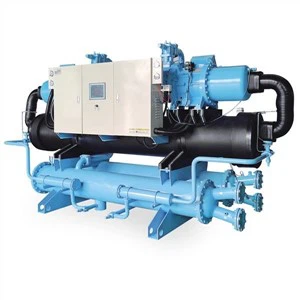
Heating,cooling,daily use water,three operating mode.Chilled water outlet temperature from 5 degree celsius to 20 degree celsius;highest hot water temperature can be 100 degree celsius.
What is Air Source Heat Pump
An air source heat pump (ASHP) is a heat pump that can absorb heat from air outside a building and release it inside; it uses the same vapor-compression refrigeration process and much the same equipment as an air conditioner, but in the opposite direction. ASHPs are the most common type of heat pump and, usually being smaller, tend to be used to heat individual houses or flats rather than blocks, districts or industrial processes.
Benefits of Air Source Heat Pump
High energy efficiency
With air source heat pumps, one of the primary benefits users can look forward to is a high energy efficiency rating. The efficiency of heating and cooling devices are measured in terms of the Heating Season Performance Factor (HSPF) and the Season Energy Efficiency Ratio (SEER), respectively.
Minimal power consumption
Unlike most other heating or cooling solutions, air source heat pumps do not require extensive power consumption in order to provide supreme comfort to a given property. Alternatively, heat pumps can also be powered using solar or wind energy, reducing electricity consumption down to zero.
Long lifespan and low maintenance
Another factor air source heat pumps are renowned for are their long lifespans. Given that these devices generally last around 20 years, they’re a long-term energy solution that generates returns from day number one. They also require little maintenance. In terms of air source heat pumps, cleaning can be done every few months and servicing just once a year.
Affordable
Another factor that works in favour of those opting for air source heat pumps is their relative affordability. While startup costs can still be high in comparison to other heating and cooling solutions, these devices are far more affordable than alternatives such as geothermal heat pumps.
-
![Air-cooled Heat Pump Unit]() Air-cooled Heat Pump UnitSANHER Air-cooled heat pump unit condenser using "V"-type structure, not only in line with the characteristics of air distribution, but also can have a larger maintenance and maintenance space. The heat exchanger consists ofread more
Air-cooled Heat Pump UnitSANHER Air-cooled heat pump unit condenser using "V"-type structure, not only in line with the characteristics of air distribution, but also can have a larger maintenance and maintenance space. The heat exchanger consists ofread more -
![Air-cooled Heat Pump Chiller]() Air-cooled Heat Pump ChillerAir-cooled heat pump chiller , air as a source of heat and cold, water as coolant. Working with fan coil units, air handling units, under heating, other end equipment, It can form a centralized cooling and heating system. With simpleread more
Air-cooled Heat Pump ChillerAir-cooled heat pump chiller , air as a source of heat and cold, water as coolant. Working with fan coil units, air handling units, under heating, other end equipment, It can form a centralized cooling and heating system. With simpleread more -
![Best Air Source Heat Pump]() Best Air Source Heat PumpAir source heat pump with three operating mode,appealing to customers.read more
Best Air Source Heat PumpAir source heat pump with three operating mode,appealing to customers.read more


Why Choose Us
Excellent product quality
We take pride in our products because every major components requires the perfect combination of modern technology.
Rich experience in production
10 year experience in Chiller manufacture. Above 50% of our staff has more than 10 year experience in HVAC industry.
High quality
We distinguish ourselves in the chiller market by flexibility of design, by ensuring the prefect performance and by always putting our customer first.
After-sales service
We have professional technician, can provide Video /Phone Training, 24 hour online service. We will send technician to overseas if needed.
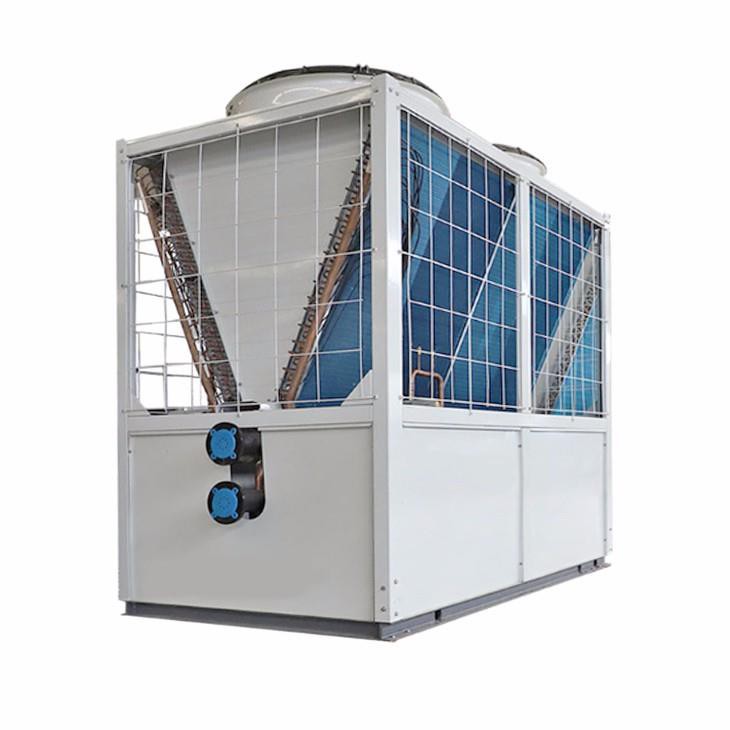
An air source heat pump system consists of a compressor and two coils made of copper or aluminum tubing; one coil is located indoors and the other one is located outdoors. In the winter, liquid refrigerant in the outdoor coil converts into a gas after absorbing heat from the air. The warm gas refrigerant then moves to the indoor coil where it releases heat as it condenses back into liquid. In the summer, an air source heat pump simply works in reverse to provide highly efficient cooling. It takes heat from the warm indoor air and moves it outside.
Types of Air Source Heat Pump
Ducted Air-Source Heat Pumps
Ducted air-source heat pumps are designed to work in homes with existing ductwork. The centralized system utilizes a network of ducts, ensuring a consistent and comfortable indoor environment. This style of unit is ideal for larger homes or commercial buildings. These heat pumps provide even temperature control throughout the entire building while maximizing energy efficiency.
Single-Zone Air-Source Heat Pumps
Single-zone air-source heat pumps are compact solutions designed to regulate the temperature in a specific area or room. These units are perfect for smaller living spaces and offer heating and cooling without the need for ductwork. Their simplicity offers effective temperature control if you just need to condition a single space.
Multiple-Zone Air-Source Heat Pumps
Multiple-zone or ductless heat pump systems consist of multiple indoor units that are connected to a singular outdoor unit. Each indoor unit operates independently, allowing for personalized climate control in different areas or rooms. These are great choices for homes without air ducts. These are also beneficial for families that don’t agree on one temperature for the entire home.
How Efficient is Heating and Cooling in an Air Source Heat Pump?
Heating Efficiency (HSPF): The Heating Season Performance Factor measures the total heat provided over a heating season divided by the total electrical energy consumed. For example, a 10.3 HSPF heat pump provides 10,300 Btu of heat for every kWh of electricity consumed. In comparison, an electric resistance heating element provides only ~3,400 Btu of heat for every kWh of electricity consumed.
Cooling Efficiency (SEER): The Seasonal Energy Efficiency Ratio measures the total heat removed over a cooling season divided by the total electrical energy consumed. For example, a 16 SEER cooling system provides 16,000 Btu of cooling for every kWh of electricity consumed.
The Difference Between Air Source Heat Pump and Ground Source Heat Pump
An air source heat pump (ASHP) uses the outside air to heat or cool a building. When used to heat a Building, this is achieved by transferring heat inside from the outside air. When used to cool a building, this is achieved by transferring heat from inside to the outside air. Air source heat pumps are driven by electricity, and systems exist that are powered by solar panels, making them both clean and energy efficient.
Ground source heat pumps (GSHP) use the constant temperature that exists just below the ground or in a body of water to transfer heating or cooling energy to a building. This is accomplished by transferring heat or cold from below the ground via underground piping that contains a refrigerant to a building’s heating system. Just like any heat pump, geothermal and water-source heat pumps are able to heat, cool, and, if so equipped, supply the house with hot water.
Home Heating
In cold winters, home heating and cooling is one of the primary applications of air source heat pumps. Traditional gas boiler heating methods are energy-intensive and polluting. In contrast, air source heat pumps utilize heat from the air for heating, with an efficiency ratio of 3 to 4 times, significantly reducing household heating costs.
Domestic Hot Water Supply
Air source heat pumps are also widely used for domestic hot water supply. Compared to traditional electric water heaters, air source heat pumps offer higher heating efficiency, providing ample hot water in a short time to meet daily household needs.
Commercial Applications
In commercial buildings, air source heat pumps are often used for heating and cooling. Modern commercial buildings require high standards for indoor environments, needing sufficient heating in winter and effective cooling in summer. Air source heat pumps can achieve cooling through reverse cycles, serving multiple purposes with a single unit, thus significantly improving equipment utilization and economic efficiency.
Pool Heating
Air source heat pumps are ideal for pool heating. Their high-efficiency characteristics allow them to maintain a constant pool temperature with lower energy consumption, offering fast heating and stable operation. Additionally, the installation and maintenance of these pumps are relatively simple, reducing the complexity and cost of pool management.
Underfloor Heating
Underfloor heating is a comfortable and efficient heating method where air source heat pumps are commonly used. By circulating hot water through pipes under the floor, these pumps can evenly heat the floor, creating a warm indoor environment. Compared to traditional radiator heating, underfloor heating is more comfortable and does not take up indoor space.
Industrial Applications
Many industrial processes require large amounts of hot water, such as food processing, chemical production, and textile dyeing. Air source heat pumps can continuously provide high-temperature hot water to meet industrial production needs. Their high efficiency and energy-saving features significantly reduce energy costs for enterprises, enhancing economic benefits.
Components of Air Source Heat Pump
The evaporator is responsible for absorbing heat from the air. In air source heat pumps, the commonly used type is the Fin Coil Evaporator, consisting of metal fins, usually made of aluminum or copper. These fins increase the surface area of the evaporator, enhancing heat exchange efficiency. The refrigerant circulates through the fins, absorbing heat from indoor air and transitioning from a liquid to a gaseous state.
The compressor is tasked with compressing the low-temperature, low-pressure gas refrigerant from the evaporator into a high-temperature, high-pressure gas. Different types of compressors include reciprocating, rotary, or scroll compressors, each with its own design and mechanism.
The condenser releases heat from the high-temperature, high-pressure gas to the outdoor air through heat dissipation. Air-cooled condensers are more prevalent in air source heat pumps, and they can be further classified into plate heat exchanger, titanium tube heat exchanger, and copper tube heat exchanger based on material and design.
The expansion valve lowers the pressure of the high-pressure liquid refrigerant from the condenser, causing it to expand into a low-pressure liquid before entering the evaporator. Expansion valves can be classified as thermostatic expansion valves (TXV) or electronic expansion valves (EEV) based on their control mechanisms.
Functioning as the brain of the heat pump, the control system monitors indoor and outdoor temperatures, controlling the operation of components such as the compressor and expansion valve to maintain stable indoor climate conditions.
Air source heat pumps have a typical outdoor air temperature range in which heat can be extracted effectively, and if temperatures are outside of this range, then they may not work as efficiently.
Air source heat pumps can typically operate down to around -4°F (-20°C) and up to around 68°F (20°C) for outside air temperatures. Output temperatures for air to water heat pumps can be up to around 140°F (60°C) for heating and down to around 41°F (5°C) for cooling. cooling purposes.
These maximum and minimum temperature ranges for both operating temperatures and outlet temperatures can vary between manufacturers and models of heat pump, but typically can work within a general temperature range.
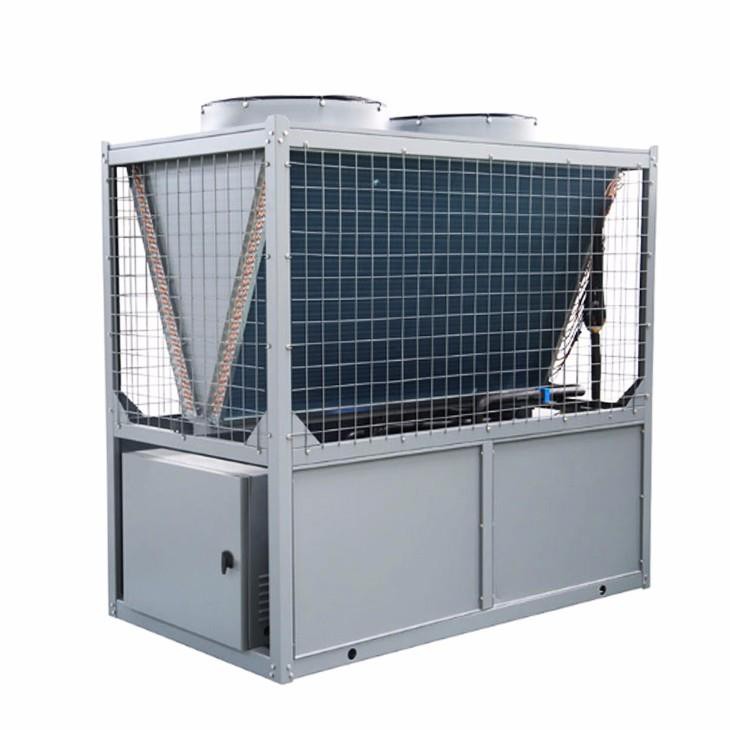
How to Maintain Air Source Heat Pump
Check the Condenser
The condenser is a critical part of any air source heat pump as it is responsible for taking in heat from outside and converting it into usable energy for your home. It is essential to check the unit regularly to ensure that the fan is not deformed or damaged and that all parts are firmly attached.
Replace the Belts
Cleaning or replacing your belts is essential as this will help ensure you get the maximum performance out of your air source heat pump. This will allow them to operate more efficiently and help prevent malfunctioning when used. It is recommended that an air source heat pump trained technician conduct any internal maintenance.
Clean the Filters
Regularly clean your unit with a soft brush. This will help keep your air source heat pump working properly, as debris and dirt can clog up the tubes located throughout your unit and lead to performance issues. These filters collect dust, pollen, and dirt and help keep them away from the system. When air filters get too dirty, they will overwork, leading to overheating and damage to the system.
Inspect and Clean the Coils
Dirt and dust can gather on each of your air source heat pump’s outdoor condenser coil and indoor evaporator coil over the years, lowering warmness switch performance. By analyzing and cleansing these coils on a regular foundation, you can guarantee their finest performance. You can use a hose on the outside unit. Be gentle to save you from injuring the fins. To ease the interior unit, use a gentle brush or vacuum cleaner.
Inspect for Refrigerant Levels
The refrigerant is responsible for moving heat from the indoor coils to the inside of your home. With low refrigerant levels, your system cannot circulate air properly, and your unit may become sluggish and ineffectual. If you notice that it is leaking or has low refrigerant levels, you will need to consult a technician to get this fixed as soon as possible.
Lubricating Moving Parts
Two major parts in particular need lubrication in an air source heat pump: the fan motor bearings and the blower motor. These components work diligently to ensure adequate airflow throughout the system. Keep them thoroughly greased to avoid overheating and potential malfunctions. Use the proper lubricant and apply a tiny amount to the designated places as directed by the manufacturer.
FAQ
We're well-known as one of the leading air source heat pump manufacturers and suppliers in China. Please rest assured to buy customized air source heat pump at competitive price from our factory. Contact us for more details.
-
![Air Cooled Scroll Packaged Chiller]() Air Cooled Scroll Packaged ChillerThere will be 2~6 pieces scroll type compressor in this air cooled chiller , according to different capacity request.read more
Air Cooled Scroll Packaged ChillerThere will be 2~6 pieces scroll type compressor in this air cooled chiller , according to different capacity request.read more -
![R134a Magnetic Bearing Centrifugal Chiller]() R134a Magnetic Bearing Centrifugal ChillerWe have the advanced large on-line test bench for centrifugal chiller, each unit undergoes a full performance testread more
R134a Magnetic Bearing Centrifugal ChillerWe have the advanced large on-line test bench for centrifugal chiller, each unit undergoes a full performance testread more -
![Water Cooled Screw Liquid Chiller]() Water Cooled Screw Liquid ChillerWater cooled screw liquid chiller (dual compressor) uses two screw compressors, it is two independent refrigerationread more
Water Cooled Screw Liquid ChillerWater cooled screw liquid chiller (dual compressor) uses two screw compressors, it is two independent refrigerationread more -
![Water Cooled Brazed Plate Type Stainless Scroll Chiller]() Water Cooled Brazed Plate Type Stainless Scroll ChillerFeature 1.Danfoss Scroll Compressor, High efficiency and reliability. 2.Danfoss thermal expansion valve, Reliabilityread more
Water Cooled Brazed Plate Type Stainless Scroll ChillerFeature 1.Danfoss Scroll Compressor, High efficiency and reliability. 2.Danfoss thermal expansion valve, Reliabilityread more -
![Air Cooled Scroll Chiller for Air Condition]() Air Cooled Scroll Chiller for Air Conditionnit control system using imported PLC program controller, man-machine interface configuration large screen touchread more
Air Cooled Scroll Chiller for Air Conditionnit control system using imported PLC program controller, man-machine interface configuration large screen touchread more -
![Computer Room Precision Air Conditioner]() Computer Room Precision Air ConditionerSANHE computer room precision air conditioners are special air conditioners designed for electronic equipment rooms.read more
Computer Room Precision Air ConditionerSANHE computer room precision air conditioners are special air conditioners designed for electronic equipment rooms.read more