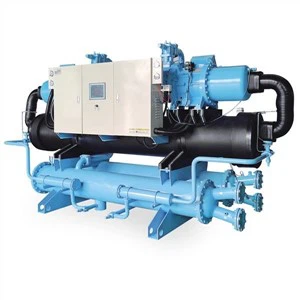
What is Air Handler Unit
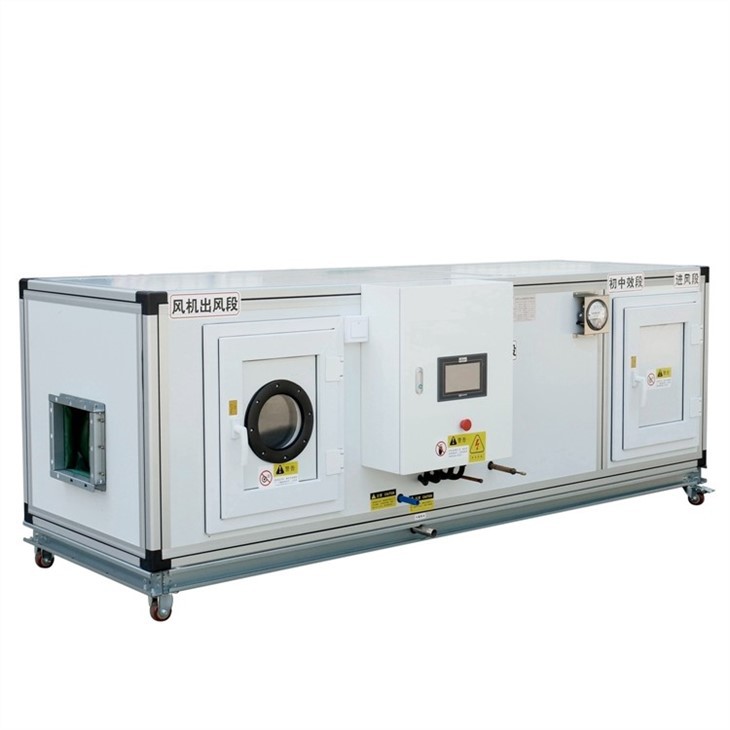
An Air Handler Unit, or AHU, is an essential component of a commercial heating, ventilating, and air-conditioning (HVAC) system. It is used to regulate and circulate air that enters from outside a building, in order to heat, cool, and filter as needed. Each time a door is opened or people enter a room, new air is introduced to the indoors that must be managed and maintained. This is done by an air handler.
Benefits of Air Handler Unit
Improved Air Quality
The air handler unit can significantly improve the indoor air quality of a commercial space by filtering out pollutants, such as dust and allergens, and maintaining a proper humidity level.
Energy Efficiency
Air handler units can help reduce energy costs by optimizing the flow of air and minimizing the load on the HVAC system. This results in less strain on the equipment and lower utility bills for the business.
Temperature Control
Air handler units regulate the temperature of the air being circulated, providing comfortable heating or cooling as needed, which enhances occupant comfort.
Versatile Applications
Air handler units can be used in a wide range of settings, from residential buildings to large commercial and industrial facilities, offering flexible solutions for air management.
-
![Modular Air Handling Units]() Modular Air Handling UnitsSANHE modular air handling unit is an air handling device that consists of a series of air handling function segments. In order to meet the technological requirements, the air treatment function section of the general modular air handlingread more
Modular Air Handling UnitsSANHE modular air handling unit is an air handling device that consists of a series of air handling function segments. In order to meet the technological requirements, the air treatment function section of the general modular air handlingread more -
![Remote Jet Air Handling Unit]() Remote Jet Air Handling UnitInstallation of air ducts is not allowed in the upper space of the room or where it is difficult to install air ducts.read more
Remote Jet Air Handling UnitInstallation of air ducts is not allowed in the upper space of the room or where it is difficult to install air ducts.read more -
![Wall Mounted Cabinet Type Fan Coil Unit]() Wall Mounted Cabinet Type Fan Coil UnitCabinet type fan coil units are mainly used in central or semi-central air cooling systems. According to the installation type, it is divided into hoisting type and floor type fan coil unit.read more
Wall Mounted Cabinet Type Fan Coil UnitCabinet type fan coil units are mainly used in central or semi-central air cooling systems. According to the installation type, it is divided into hoisting type and floor type fan coil unit.read more -
![Vertical Cabinet Fan Coil Unit]() Vertical Cabinet Fan Coil UnitThe standard universal model with air supply flange can be connected to the external air duct, and the user can choose the long-range jet blower type.read more
Vertical Cabinet Fan Coil UnitThe standard universal model with air supply flange can be connected to the external air duct, and the user can choose the long-range jet blower type.read more -
![Horizontal Air Handler Unit]() Horizontal Air Handler UnitThe air volume of common models is 4000-80000CMH, and the common coils are 4 rows, 6 rows or 8 rows.read more
Horizontal Air Handler UnitThe air volume of common models is 4000-80000CMH, and the common coils are 4 rows, 6 rows or 8 rows.read more


Why Choose Us
Excellent product quality
We take pride in our products because every major components requires the perfect combination of modern technology.
Rich experience in production
10 year experience in Chiller manufacture. Above 50% of our staff has more than 10 year experience in HVAC industry.
High quality
We distinguish ourselves in the chiller market by flexibility of design, by ensuring the prefect performance and by always putting our customer first.
After-sales service
We have professional technician, can provide Video /Phone Training, 24 hour online service. We will send technician to overseas if needed.
How an Air Handler Unit Works
First, air returns from the space it’s ventilating, passing back through a duct to the air handler unit. Here, the return air typically moves into a mixing box and blends with warmer, vented in outdoor air. However, not all air handlers use fresh outdoor air. Many simply recirculate the cool air present in the space.
The air continues through a rack of air filters. Then it moves across the evaporator’s cooling coil, which contains cold water or refrigerant to condition the air. Finally, the blower pushes it through the duct work and throughout the space. Sometimes there’s a small heating element just after the evaporator coil to control the air’s humidity before it enters the space.
You can control basic air handlers with something as simple as a thermostat. However, many facilities have a central computer to handle the complexity of managing multiple air handling units.

The casing (also known as the box) of an air handler unit is made of double-skinned insulated panels (also known as insulated sandwich panels) and a structural structure. AluZinc, aluminum, and galvanised steel are the most popular framing materials. Galvanised steel for the inner skin and prepainted galvanised steel for the outer skin make up the majority of materials used for panel skin. The inside skin of sanitary AHUs occasionally consists of stainless steel.
Types of Air Handler Unit
Chilled Water Air Handler Units
A chilled water air handler unit is a type of HVAC system that uses chilled water as a medium to cool and dehumidify the air. It consists of a cooling coil, a supply fan, filters, dampers, and a heating coil (optional). The chilled water coil removes heat from the air, and the supply fan circulates the conditioned air throughout the building.
Direct Expansion (DX) Air Handler Units
A direct expansion (DX) air handler unit, also known as a rooftop unit (RTU), is a self-contained HVAC system commonly used in commercial buildings. It uses refrigerant as the cooling medium and includes a compressor, evaporator coil, condenser coil, supply fan, filters, and optional heating elements. DX air handlers provide both cooling and heating functions.
Package Air Handler Unit
A package air handler unit is a self-contained DX HVAC system typically installed outdoors or on the rooftop of a building. It combines heating, cooling, and ventilation functions into a single unit. The package air handler includes a heating and cooling coil, supply fan, filters, dampers, and sometimes a heat recovery system.
The main difference between an air handler unit and ordinary air conditioner is that an air handling unit produces cool/warm air at one location and sends that air to multiple rooms, while an ordinary commercial air conditioner uses the individual indoor units installed in the rooms for producing cool/warm air. Another difference is that the air handling unit cools/heats the air taken in from the outside and sends it to the rooms, while the ordinary commercial air conditioner takes in the room air, cools/heats that air and discharges cool/warm air into the room.

One significant difference between AHU and FCU is in the working principle. Although both HVAC systems are used to condition and condition air, they work in different modes.
AHU working principle revolves around centralized air processing for large spaces. The HVAC system absorbs ambient air from outside, then passes it through the various components embedded within the unit. After that, the conditioned air is distributed through an extensive number of ducts to the various parts of the building. This system is best suited for applications where uniform temperature is needed to be maintained throughout the whole building.
On the other hand, the FCU working principle is more decentralized. The HVAC system is designed to provide individual or zonal temperature control within a building. The FCU absorbs air from the indoor space through the fan, then sends it to the coil that heats or cools the air (depending on your requirement). After that, the conditioned air is released to the connected parts of the building.
Application of Air Handler Unit
HVAC Systems: Air handler units are an integral part of heating, ventilation, and air conditioning (HVAC) systems. They help regulate the temperature, humidity, and air quality within a building, ensuring that occupants are comfortable and healthy.
Hospitals: Hospitals require a high level of air quality to prevent the spread of infection and disease. Air handler units are used to filter and circulate air throughout the building, ensuring that patients and staff breathe clean, healthy air.
Industrial Processes: Air handler units are used in a variety of industrial processes to maintain a specific temperature, humidity, or air quality. They are commonly used in pharmaceutical manufacturing, food processing, and other industries that require precise environmental control.
Clean Rooms: Air handler units are an essential component of clean rooms, which are highly controlled environments used in industries such as semiconductor manufacturing, biotechnology, and pharmaceuticals. The AHUs in these facilities must maintain extremely low levels of particulate matter, temperature, and humidity.
Laboratories: Laboratories require highly controlled environments to conduct experiments and research. Air handler units are used to maintain stable temperature and humidity levels, as well as to provide ventilation to prevent the buildup of potentially hazardous chemicals or fumes.
Commercial Buildings: Air handler units are commonly used in large commercial buildings such as office towers, shopping malls, and airports. They help regulate the temperature and humidity, as well as circulate fresh air throughout the building.
Function and Components
An Air Handling Unit (AHU) is a large, (typically 2000-100,000cfm) complex piece of equipment designed to regulate and circulate air within a building. It is typically part of a central HVAC system and is used to handle large volumes of air across multiple zones or an entire building. AHUs can be configured in various ways to include components such as:
Blowers/Fans
These are responsible for moving air through the unit and into the building's ductwork. They ensure that air circulates effectively throughout the designated spaces.
Heating/Cooling Coils
These coils condition the air by either heating or cooling it, depending on the requirements of the building. The coils use electric heating coils, chilled water, hot water, or refrigerants to achieve the desired air temperature.
Filters
AHUs often contain multiple stages of filtration to remove particulates, dust, and other contaminants from the air. Usual filtration for commercial buildings uses MERV-13 grade filters. High-efficiency particulate air (HEPA) filters may be used for environments with very stringent air quality requirements.
Humidifiers/Dehumidifiers
Depending on the application, AHUs can include components to add or remove moisture from the air, maintaining optimal humidity levels.
Mixing Chambers
These allow the mixing of return air from the building with fresh outdoor air.
Dampers
Dampers control the flow of air into and out of the unit, helping to manage air pressure and ventilation rates.

Selecting the right type of air handler unit is paramount for accurately regulating temperature, humidity, and air quality in indoor environments. Air handler units are mechanical components that distribute conditioned air throughout a building space. When selecting an air handler unit, critical factors include the type of space to be serviced, the required airflow, and the desired level of energy efficiency and cost savings.
For commercial or industrial applications, the selection process can be particularly complex, taking into account factors such as the type of building, the size of the space, and the type of occupants. Ultimately, choosing the right air handler unit requires a combination of technical knowledge, practical experience, and careful consideration of the unique needs of each application.
Air Handler Unit Troubleshooting - Common Issues and Solutions
Issue: Inadequate airflow can result from clogged filters, malfunctioning fans, or blocked ducts. Insufficient airflow leads to poor ventilation, uncomfortable indoor temperatures, and compromised air quality.
Solution: Regularly inspect and replace air filters, ensuring they are clean and free from debris. Check the fan motor and blades for damage or wear, and clean ducts to remove any obstructions.
Issue: Uneven temperatures in different parts of a building indicate poor distribution of conditioned air. This can result from imbalanced ductwork, closed dampers, or improperly configured VAV systems.
Solution: Ensure dampers are properly adjusted to balance airflow and verify that VAV systems are calibrated correctly. Conduct a ductwork inspection to identify any restrictions or obstructions that may affect airflow distribution.
Issue: Noisy AHUs can be disruptive and indicate issues with fan blades, belts, or bearings. Excessive noise can impact occupant comfort and overall well-being.
Solution: Regularly inspect and lubricate fan components, ensuring that belts are properly tensioned. If noise persists, consider adding vibration isolation measures to reduce operational vibrations and noise transmission.
Issue: Diminished indoor air quality can result from inadequate filtration, contaminated coils, or leaks in the ductwork, leading to discomfort and health concerns.
Solution: Install high-quality air filters and regularly replace them to ensure efficient particle and allergen removal. Schedule routine coil cleaning to prevent mould and bacteria buildup. Inspect ductwork for leaks and seal any gaps to prevent contaminants from entering.
Issue: High energy consumption can indicate inefficient AHU operation, often resulting from improper fan speed settings, leaky ducts, or failing components.
Solution: Implement energy-efficient practices such as using variable frequency drives (VFDs) to adjust fan speeds based on demand. Regularly inspect ductwork for leaks and seal them to prevent air loss. Conduct regular maintenance to identify and replace worn-out components that may contribute to energy waste.
How to Maintain Air Handler Unit
Filter Changes: The air filters should be checked regularly and replaced as needed to ensure optimal airflow and air quality. How often depends on the type of filter and the conditions in your home, but generally, it's recommended every 1-3 months.
Coil Cleaning: To maintain efficiency, the evaporator and condenser coils should be kept clean. Dirt and debris can insulate coils and reduce their ability to absorb or release heat.
Inspecting and Sealing Ducts: Leaky ducts can significantly reduce the efficiency of your system. Regular inspection and sealing can help maintain performance.
Regular Check-Ups: An HVAC system benefits from regular professional check-ups like a car. These often include checking refrigerant levels, inspecting electrical components, and verifying the system's operation.

FAQ
We're well-known as one of the leading air handler unit manufacturers and suppliers in China. Please rest assured to buy customized air handler unit at competitive price from our factory. Contact us for more details.
-
![Air Cooled Scroll Packaged Chiller]() Air Cooled Scroll Packaged ChillerThere will be 2~6 pieces scroll type compressor in this air cooled chiller , according to different capacity request.read more
Air Cooled Scroll Packaged ChillerThere will be 2~6 pieces scroll type compressor in this air cooled chiller , according to different capacity request.read more -
![R134a Magnetic Bearing Centrifugal Chiller]() R134a Magnetic Bearing Centrifugal ChillerWe have the advanced large on-line test bench for centrifugal chiller, each unit undergoes a full performance testread more
R134a Magnetic Bearing Centrifugal ChillerWe have the advanced large on-line test bench for centrifugal chiller, each unit undergoes a full performance testread more -
![Water Cooled Screw Liquid Chiller]() Water Cooled Screw Liquid ChillerWater cooled screw liquid chiller (dual compressor) uses two screw compressors, it is two independent refrigerationread more
Water Cooled Screw Liquid ChillerWater cooled screw liquid chiller (dual compressor) uses two screw compressors, it is two independent refrigerationread more -
![Water Cooled Brazed Plate Type Stainless Scroll Chiller]() Water Cooled Brazed Plate Type Stainless Scroll ChillerFeature 1.Danfoss Scroll Compressor, High efficiency and reliability. 2.Danfoss thermal expansion valve, Reliabilityread more
Water Cooled Brazed Plate Type Stainless Scroll ChillerFeature 1.Danfoss Scroll Compressor, High efficiency and reliability. 2.Danfoss thermal expansion valve, Reliabilityread more -
![Air Cooled Scroll Chiller for Air Condition]() Air Cooled Scroll Chiller for Air Conditionnit control system using imported PLC program controller, man-machine interface configuration large screen touchread more
Air Cooled Scroll Chiller for Air Conditionnit control system using imported PLC program controller, man-machine interface configuration large screen touchread more -
![Computer Room Precision Air Conditioner]() Computer Room Precision Air ConditionerSANHE computer room precision air conditioners are special air conditioners designed for electronic equipment rooms.read more
Computer Room Precision Air ConditionerSANHE computer room precision air conditioners are special air conditioners designed for electronic equipment rooms.read more