What is Fan Coil Unit
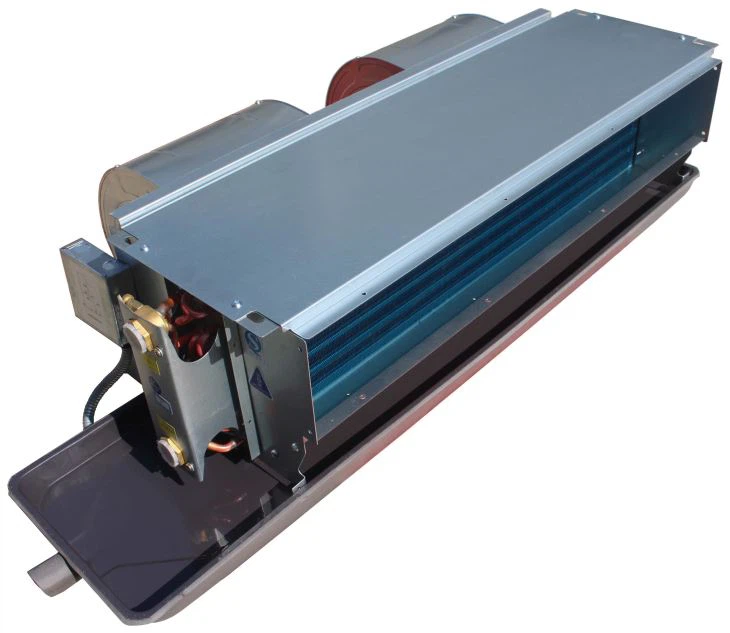
A fan coil unit (FCU) is a device used to heat or cool a room without the need for ductwork. It consists of an indoor coil, a fan and an outdoor condensing unit. The fan forces air through the indoor coil, which is filled with refrigerant, either cooling or heating it depending on the desired temperature in the room. This cooled or heated air is then sent into the room to maintain a comfortable environment. FCUs are often found in offices and other commercial buildings as well as some homes.
Benefits of Fan Coil Unit
Energy Efficiency
Fan coil units are highly energy-efficient as they can work with both heating and cooling systems, adjusting to desired temperatures and minimizing energy consumption.
Versatility
Fan coil units can be used in various residential, commercial and industrial applications. FCUs are compact and versatile, making them ideal for spaces where room for HVAC equipment is limited.
Cost-Effective Maintenance
Fan coil units are easier to maintain and service than complex HVAC systems, leading to lower long-term maintenance costs.
Compatibility with Central Systems
Fan coil units work well with central chilled water or hot water systems, making them suitable for both small buildings and large multi-story complexes.
-
![Horizontal Concealed Fan Coil Unit]() Horizontal Concealed Fan Coil UnitThe unit air flow 340~2380CMH ,cooling capacity 1.8~12.6KW. Static pressure at the outlet: conventional model12Pa, common high static pressure 30Pa, special high static pressure up to 50Pa.read more
Horizontal Concealed Fan Coil UnitThe unit air flow 340~2380CMH ,cooling capacity 1.8~12.6KW. Static pressure at the outlet: conventional model12Pa, common high static pressure 30Pa, special high static pressure up to 50Pa.read more -
![Vertical Concealed Fan Coil Unit]() Vertical Concealed Fan Coil UnitThe standard model is equipped with a return air filter. The air volume is from 340-2380CMH, and the cooling capacity is from 1.8-12.6KW.read more
Vertical Concealed Fan Coil UnitThe standard model is equipped with a return air filter. The air volume is from 340-2380CMH, and the cooling capacity is from 1.8-12.6KW.read more -
![Horizontal Mounted Fan Coil Unit]() Horizontal Mounted Fan Coil UnitIt is no longer popular in modern new buildings. The model is completely unpacked and not hidden in the ceiling.read more
Horizontal Mounted Fan Coil UnitIt is no longer popular in modern new buildings. The model is completely unpacked and not hidden in the ceiling.read more -
![Vertical Mounted Fan Coil Unit]() Vertical Mounted Fan Coil UnitThe wall-mounted fan coil is the most commonly used indoor model when adding air-conditioning systems in old buildings. It is no longer popular in modern new buildings.read more
Vertical Mounted Fan Coil UnitThe wall-mounted fan coil is the most commonly used indoor model when adding air-conditioning systems in old buildings. It is no longer popular in modern new buildings.read more -
![Large Air Volume Fan Coil Unit]() Large Air Volume Fan Coil UnitThis is a special type of fan coil unit with a certain external air supply pressure for 220V single-phase power supply. The model adopts the common extrusion airflow structure of the fan coil, and the three-row tube cooler with low windread more
Large Air Volume Fan Coil UnitThis is a special type of fan coil unit with a certain external air supply pressure for 220V single-phase power supply. The model adopts the common extrusion airflow structure of the fan coil, and the three-row tube cooler with low windread more -
![Ceiling Cassette Fan Coil Unit]() Ceiling Cassette Fan Coil UnitThe ultra-thin model has a small height, but the condensate needs to be forced out by a micro-pump installed in the machine.read more
Ceiling Cassette Fan Coil UnitThe ultra-thin model has a small height, but the condensate needs to be forced out by a micro-pump installed in the machine.read more


Why Choose Us
Excellent product quality
We take pride in our products because every major components requires the perfect combination of modern technology.
Rich experience in production
10 year experience in Chiller manufacture. Above 50% of our staff has more than 10 year experience in HVAC industry.
High quality
We distinguish ourselves in the chiller market by flexibility of design, by ensuring the prefect performance and by always putting our customer first.
After-sales service
We have professional technician, can provide Video /Phone Training, 24 hour online service. We will send technician to overseas if needed.

An on/off switch or thermostat controls the fan coil unit’s functions. A fan inside the unit draws in air from the indoor space. Some units allow the introduction of fresh air from outside, too. The incoming air passes through a filter and flows across the unit’s coil. Refrigerant or cold/hot water circulates through the coil to heat or chill the air. Some units use electric heat strips for heating. The fan blows the conditioned air out of the system and back into the indoor space.
The basic unit and cabinet are fabricated of galvanized steel. Many units have decorative cabinets fabricated of heavy gauge steel, bonderized, and finished with an attractive, oven-baked paint. The condensate drain pan is fabricated of galvanized steel with closed-cell, fire retardant, foam insulation coating. The heat exchanger or coil is usually made from copper tubes with aluminum fins to facilitate efficient heat transfer.

Function of a Fan Coil Unit
Air Circulation
The fan draws air from the room through the filter.
Heat Exchange
Air passes over the heat exchanger, where it is heated or cooled depending on the operation mode.
Conditioned Air Supply
The conditioned air is then blown back into the room, adjusting the temperature to the desired setpoint.

Fan coil unit in HVAC uses refrigerants to help cool or heat the air in a room. The refrigerants are mostly placed within the indoor calls of the fan coil unit. As a result, when the fan is turned on, it becomes easier to force the air through this coil and regulate the temperature.
All HVAC systems make use of refrigerants that are maintained periodically. The reason is that if any of the refrigerants are found to be leaking, it can lead to serious environmental consequences. Thus, FCUs in HVAC need to be properly regulated and regularly maintained to ensure that the fan call unit is working efficiently.
Horizontal above a ceiling void fan coils
Ideal for new build developments or as a retrofit option where the units need to (or can be) concealed in the ceiling void. Fan coils in this type of installation can work slightly harder per unit as acoustics are buffered by the ceiling and any other insulating layers reducing noise levels in space below.
Horizontal exposed fan coils
Exposed fan coil design revolves around how the units look and the requirements for installation to align with the aesthetics of interior spaces. Another consideration when exposing fan coils is acoustics. As there is no longer something to insulate any noise produced, you may need to specify larger units working at a lower rate or utilising attenuators to meet the required demands to ensure limited disruption to occupants.
Underfloor fan coils
A perimeter solution used in conjunction with displacement ventilation system to combat drafts and solar gains from glazed facades or curtain walls. Underfloor fan coils also allow greater floor to ceiling heights for more spacious designs.
Wall mounted fan coils
Ideal for refurbishments where low ceiling heights limit installation within the void, in which case a vertical unit can either be mounted within a false wall or cabinet, using a chassis type or can be supplied with a case. The units can be mounted either at low level or high on the wall.
Key Differences Between Air Handling Units (AHUs) vs. Fan Coil Units (FCUs)
Scale and Capacity
One of the most significant differences between AHUs and FCUs is the scale at which they operate. AHUs are designed for large-scale air handling, capable of conditioning and distributing air across multiple zones or an entire building. In contrast, FCUs are smaller units intended for localized temperature control in individual rooms or small areas.
Air Handling and Ventilation
AHUs are responsible for not only heating and cooling but also for managing ventilation, building pressure and air quality. They can handle large volumes of outside air, which is crucial for maintaining indoor air quality in commercial and industrial settings. FCUs, on the other hand, do not typically handle outside air and are focused solely on temperature control. This makes AHUs essential for buildings that require ventilation and fresh air intake, while FCUs are more suited for spaces where only localized temperature control is needed.
Installation and Maintenance
AHUs are typically larger, more complex systems that require dedicated space for installation, such as mechanical rooms or rooftops. Their maintenance involves regular checks of components like filters, coils, fans, and control systems, often requiring specialized knowledge and equipment. FCUs are smaller, simpler units that are easier to install and maintain. They are often installed in ceilings, walls, or floors, and their maintenance primarily involves cleaning or replacing filters and checking the operation of fans and coils.
Energy Efficiency and Control
AHUs, being part of a central HVAC system, can be controlled by a Building Management System (BMS), allowing for centralized control and monitoring of energy use. This can lead to more efficient operation, especially in large buildings. FCUs, with their localized control, offer flexibility in energy use but may not be as efficient in large-scale applications where centralized control would be more effective.
HVAC System: Fan coil units are connected to a centralized HVAC system and are used in conjunction with other types of air handling units. This allows for greater control of the temperature within a space, as well as improved energy efficiency.
Standalone Application: Fan coil units can also be used in standalone applications and can be powered by electricity. This is ideal for smaller spaces or areas where a centralized HVAC system is not feasible.
Residential Buildings
Fan coil units are most commonly found in residential buildings. In residential properties, they are typically found in apartments and can be used in both single and multi-unit dwellings.
Commercial Buildings
In commercial buildings, Fan coil units are typically used in office buildings, hotels, and other similar facilities. Offices, retail stores, and hotels where different zones require different temperature settings.
Entertainment
Fan coil units are also becoming increasingly popular in recreational facilities such as swimming pools and fitness centers, where they can provide both heating and cooling in a single unit.
Components of Fan Coil Unit
Indoor Coil (Water Coil or Heat Exchanger): The water coil or heat exchanger is a critical component of an AC fan coil. It performs the mission-critical role of transferring heat between the refrigerant and air to manage the interior temperature inside the room.
Coil: The FCU system comprises a coil vital for heat exchange. During cooling, the room air is heated by the coil, which heats air in heating mode. It follows basic laws of thermodynamics, which are mainly conduction and convection.
Fan (Centrifugal or Axial): The fan, which falls into two basic types of fans—centrifugal or axial, is one of the essential components in the fan coil AC unit. It is used to circulate the conditioned air throughout the area in which it is designed to be fixed. Centrifugal fans work with higher-pressure systems, while axial fans move large volumes of air at lower pressures.
Outdoor Condensing Unit: It consists of the compressor and condenser coil, which are important to the cooling process. The compressor increases the refrigerant pressure, which the condenser coil removes into the outside air for the refrigeration cycle to be complete.
Thermostat: Operating as an interface between the user and the control unit, the thermostat enables temperature setting. If the temperature goes above or below what was set, the fan coils HVAC will sense this, causing heating or cooling to adjust.
Filter: Dust, particles, and contaminants are caught within air filters, which help maintain indoor air quality. Consequently, this prevents damage to internal components and ensures better health.
When a fan coil unit is used to heat or cool a space, it uses the principles of convection and air displacement. In heating mode, warm air is drawn in from the return side of the unit and passed over cold water coils which transfer heat to the air before it is released into the room. On the cooling side, cold air is drawn in from outside of the building and runs through hot water coils which absorb heat from within the room. The heated or cooled air then flows out through outlets located throughout the space. This process allows for efficient circulation of either warm or cool-conditioned air throughout a given area.
How to Prolong the Life of Your Fan Coil Unit
Regular Cleaning of Coils
Keeping the coils clean is crucial for efficient operation. Dust and debris can accumulate on the coils, reducing heat transfer efficiency. Clean the coils every three months using a soft brush or vacuum. For deep cleaning, use a mild detergent or coil cleaner. This maintenance step ensures the unit performs effectively and avoids unnecessary strain.
Replace or Clean Air Filters Frequently
Air filters trap dust and allergens, maintaining clean air circulation. Over time, filters become clogged and restrict airflow. Replace or clean filters every one to three months, depending on the environment. For reusable filters, wash them with warm, soapy water and let them dry completely. Clean filters enhance air quality and prevent the unit from overworking.
Inspect and Seal Air Leaks
Air leaks around the fan coil unit can reduce its efficiency. Check for gaps or cracks in the casing or ductwork regularly. Use weatherstripping or sealant to close any leaks. Sealing air leaks helps maintain consistent temperatures and reduces energy loss, prolonging the unit’s life and lowering operational costs.
Check and Clean the Drain Pan and Condensate Line
The drain pan and condensate line remove excess moisture, preventing water damage. Inspect the drain pan regularly for standing water and clean it to avoid mold growth. Flush the condensate line with a mixture of water and bleach to clear clogs. Regular maintenance of these components ensures efficient moisture removal and prevents water-related issues.
Lubricate Moving Parts
Lubricating moving parts like fans and motors reduces friction and wear. Apply a few drops of oil to the bearings every six months. Follow the manufacturer’s guidelines for the correct type of lubricant. Regular lubrication ensures smooth operation and extends the lifespan of mechanical components.
Monitor Thermostat Settings
Proper thermostat management reduces the workload on your fan coil unit. Set the thermostat to an energy-efficient temperature and avoid frequent adjustments. Use a programmable thermostat to automatically adjust settings based on occupancy. This practice helps maintain comfort while minimizing strain on the unit.
Schedule Regular Professional Inspections
Professional inspections are vital for detecting potential issues early. Hire a certified HVAC technician to inspect your unit annually. Technicians can check for wear, clean internal components, and optimize system performance. Regular inspections prevent breakdowns and keep the unit running efficiently.
Keep the Area Around the Unit Clear
Ensure there is adequate space around the fan coil unit for proper airflow. Avoid blocking air vents with furniture or other objects. Restricted airflow forces the unit to work harder, increasing wear and tear. Keeping the area clear ensures efficient operation and helps the unit last longer.
Avoid Overloading the System
Overloading the fan coil unit can lead to premature failure. Make sure the unit is properly sized for the space it serves. Avoid setting the temperature too low or too high, which can cause the unit to overwork. Proper sizing and load management reduce strain and extend the unit’s life.
FAQ
We're well-known as one of the leading fan coil unit manufacturers and suppliers in China. Please rest assured to buy customized fan coil unit at competitive price from our factory. Contact us for more details.
cooling surface area, flow rate in cooling system, brine cooling system-
![Air Cooled Scroll Packaged Chiller]() Air Cooled Scroll Packaged ChillerThere will be 2~6 pieces scroll type compressor in this air cooled chiller , according to different capacity request.read more
Air Cooled Scroll Packaged ChillerThere will be 2~6 pieces scroll type compressor in this air cooled chiller , according to different capacity request.read more -
![R134a Magnetic Bearing Centrifugal Chiller]() R134a Magnetic Bearing Centrifugal ChillerWe have the advanced large on-line test bench for centrifugal chiller, each unit undergoes a full performance testread more
R134a Magnetic Bearing Centrifugal ChillerWe have the advanced large on-line test bench for centrifugal chiller, each unit undergoes a full performance testread more -
![Water Cooled Screw Liquid Chiller]() Water Cooled Screw Liquid ChillerWater cooled screw liquid chiller (dual compressor) uses two screw compressors, it is two independent refrigerationread more
Water Cooled Screw Liquid ChillerWater cooled screw liquid chiller (dual compressor) uses two screw compressors, it is two independent refrigerationread more -
![Water Cooled Brazed Plate Type Stainless Scroll Chiller]() Water Cooled Brazed Plate Type Stainless Scroll ChillerFeature 1.Danfoss Scroll Compressor, High efficiency and reliability. 2.Danfoss thermal expansion valve, Reliabilityread more
Water Cooled Brazed Plate Type Stainless Scroll ChillerFeature 1.Danfoss Scroll Compressor, High efficiency and reliability. 2.Danfoss thermal expansion valve, Reliabilityread more -
![Air Cooled Scroll Chiller for Air Condition]() Air Cooled Scroll Chiller for Air Conditionnit control system using imported PLC program controller, man-machine interface configuration large screen touchread more
Air Cooled Scroll Chiller for Air Conditionnit control system using imported PLC program controller, man-machine interface configuration large screen touchread more -
![Computer Room Precision Air Conditioner]() Computer Room Precision Air ConditionerSANHE computer room precision air conditioners are special air conditioners designed for electronic equipment rooms.read more
Computer Room Precision Air ConditionerSANHE computer room precision air conditioners are special air conditioners designed for electronic equipment rooms.read more