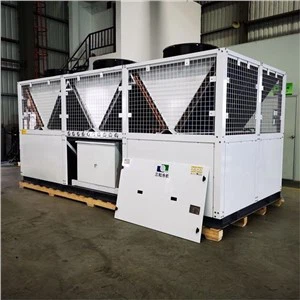
What is the difference between a single - stage and a two - stage water - cooled screw chiller? That's a question I get asked a lot as a supplier of Water - cooled Screw Chillers. Let's break it down and keep it real simple.
First off, let's talk about how these chillers work in general. Water - cooled screw chillers are pretty cool (pun intended) pieces of equipment. They're used in a bunch of different applications, like in big commercial buildings to keep the air conditioning systems running smoothly, or in industrial processes where you need to cool things down fast. The main job of these chillers is to remove heat from a liquid (usually water) and transfer it to the outside environment.


Single - stage water - cooled screw chillers
A single - stage water - cooled screw chiller is like the straightforward, no - frills option. It's got one main stage of compression. In this setup, the refrigerant gas gets sucked into the compressor, and then it gets compressed in one go to a higher pressure and temperature. After that, it goes through the condenser, where it gives off its heat to the cooling water flow. Then, the refrigerant goes through an expansion valve, and it cools down again before entering the evaporator. In the evaporator, it takes in heat from the water that needs to be chilled.
One of the big advantages of single - stage chillers is their simplicity. They're easier to understand, maintain, and service. If you're runnin' a small - to - medium - sized operation, like a local office building or a small factory, a single - stage chiller might be all you need. They're also generally a bit cheaper to buy upfront. You can check out our Screw Compressor Chiller for more detailed info on what's available in single - stage options.
However, single - stage chillers do have their limitations. They're not as efficient when you need to reach really low temperatures or handle large temperature differences. For instance, if you're working in an industrial process that requires super - cold temperatures, a single - stage chiller might struggle to keep up. It has to work really hard to compress the refrigerant all at once, which can lead to higher energy consumption and wear and tear on the compressor.
Two - stage water - cooled screw chillers
Now, let's move on to two - stage water - cooled screw chillers. These are a bit more complex, but they pack a serious punch. As the name suggests, they have two stages of compression. The refrigerant first goes through a partial compression in the first stage. Then, it gets cooled down a bit before it enters the second stage, where it gets compressed further to a higher pressure.
The two - stage design offers several advantages. First of all, it's much more energy - efficient, especially when dealing with larger temperature differences or low - temperature applications. The partial compression in the first stage reduces the workload on the second stage, allowing the chiller to operate more smoothly and use less power. This means long - term savings on your energy bills, which can be a big deal for large commercial operations or industrial plants.
Two - stage chillers are also better at handling variable loads. In a real - world scenario, the cooling demand can change throughout the day or season. A two - stage chiller can adjust its operation more effectively to match these changing loads, providing consistent and reliable cooling.
If you're in the market for a chiller that can handle high - end commercial applications, check out our Commercial Water Cooled Chiller. There, you'll find options that can meet the demands of big commercial spaces. And for those who need a high - performance solution for liquid cooling, our Water Cooled Screw Liquid Chiller is a great choice.
Other differences
In terms of cost, two - stage chillers usually cost more upfront. But as I mentioned before, the energy savings over time can really make up for that initial investment. And when it comes to the physical size, two - stage chillers are generally a bit larger because they have more components. This means you need to have enough space to install them.
Maintenance is also a bit different. Single - stage chillers, being simpler, usually have fewer parts that can go wrong. But with two - stage chillers, you need to make sure both compression stages are working properly. However, most modern two - stage chillers come with advanced monitoring systems that can help detect any issues early on.
Choosing the right chiller
So, how do you decide which one is right for you? Well, it all depends on your specific needs. If you've got a small operation with a relatively stable cooling demand, a single - stage chiller might be the way to go. It's cost - effective and easy to manage. On the other hand, if you're running a large commercial building or an industrial process that requires precise temperature control and can benefit from energy savings, a two - stage chiller is probably a better fit.
If you're still not sure, don't hesitate to reach out to us. We've been in the business of supplying Water - cooled Screw Chillers for a long time, and our team of experts can help you figure out which chiller is the best match for your situation. Whether it's a single - stage or a two - stage chiller, we've got the knowledge and the products to meet your cooling needs. Contact us today to start the conversation and see how we can help you with your cooling requirements.
References
- ASHRAE Handbook: HVAC Systems and Equipment. This is a great resource for in - depth technical information about chillers and other HVAC equipment.
- Screw Compressor Manufacturer's Brochures. These provide detailed specs and performance data for different screw compressors used in chillers.