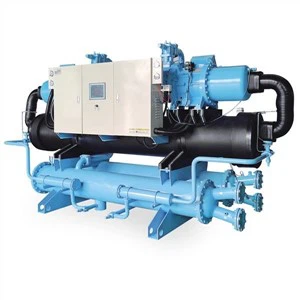
What is Low Temperature Chiller?
A low temperature chiller is a type of process chiller that is designed to operate at extra low temperatures. Low temperature chillers are used in a variety of industrial and commercial applications, such as food processing, pharmaceutical manufacturing, and chemical production.Low temperature chiller is the temperature range of temperatures falling below what is considered a low freezing point and above the temperatures associated with cryogenics. The chiller low evaporator refrigerant temperature of this classification is from -58° f to -148° f (-50° c to -100° c).
Advantages of Low Temperature Chiller
Safety assurance
The primary benefit of explosion-proof, low-temperature chillers is the assurance of safety in hazardous environments. By eliminating potential ignition sources, these chillers significantly reduce the risk of explosions, protecting personnel and valuable equipment.
Reliable cooling
These low-temperature chillers provide precise and reliable cooling in low-temperature applications, ensuring consistent performance even in challenging environments. They are commonly used in petrochemical, pharmaceutical, chemical processing, and oil and gas industries.
Process efficiency
Explosion-proof, low-temperature chillers optimize process efficiency by maintaining stable and controlled temperatures. This is crucial for cryogenic cooling, laboratory testing, chemical reactions, and industrial freezing applications.
Independent refrigeration cycle system
The large-capacity unit has two or more independent refrigeration circuits. Even if one circuit fails/maintains, the other circuit can operate normally. With backup function, it is especially suitable for industrial non-stop environment.
-
![Low Temperature Glycol Chillers]() Low Temperature Glycol ChillersSANHER Water Cooled Low Temperature Chillers are widely used in low temperature places such as biochemical, pharmaceutical, chemical, vacuum coating, electronics, electrical appliances, alloy materials, etc.read more
Low Temperature Glycol ChillersSANHER Water Cooled Low Temperature Chillers are widely used in low temperature places such as biochemical, pharmaceutical, chemical, vacuum coating, electronics, electrical appliances, alloy materials, etc.read more -
![Low Temperature Chiller 0℃]() Low Temperature Chiller 0℃The low temperature chiller is a device that provides constant temperature, constant current, and constant pressure of cold water.read more
Low Temperature Chiller 0℃The low temperature chiller is a device that provides constant temperature, constant current, and constant pressure of cold water.read more -
![Low Temperature Glycol Chiller -5℃]() Low Temperature Glycol Chiller -5℃Whether you need -30ºC or -5ºC, we are here to help you complete that task. We will take the time to understand your process and operating condition before making an equipment selection.read more
Low Temperature Glycol Chiller -5℃Whether you need -30ºC or -5ºC, we are here to help you complete that task. We will take the time to understand your process and operating condition before making an equipment selection.read more -
![Low Temperature Glycol Chiller System -10℃]() Low Temperature Glycol Chiller System -10℃We can customize different kinds of chillers and central air conditioners according to customer request, welcome to contact us for details, we will provide professional solutions for you.read more
Low Temperature Glycol Chiller System -10℃We can customize different kinds of chillers and central air conditioners according to customer request, welcome to contact us for details, we will provide professional solutions for you.read more -
![Low Temperature Process Chiller -15℃]() Low Temperature Process Chiller -15℃It has a low freezing point, stable nature, miscible with water, wide temperature range, low price, and heat capacity larger.read more
Low Temperature Process Chiller -15℃It has a low freezing point, stable nature, miscible with water, wide temperature range, low price, and heat capacity larger.read more -
![Low Temperature Chiller Cooling System -20℃]() Low Temperature Chiller Cooling System -20℃Coolant of -20℃ model: 40% ethylene glycol aqueous solution.. Chilled aqueous solution Temperature range: -20℃~-10℃read more
Low Temperature Chiller Cooling System -20℃Coolant of -20℃ model: 40% ethylene glycol aqueous solution.. Chilled aqueous solution Temperature range: -20℃~-10℃read more -
![Low Temperature Glycol Chiller -25℃]() Low Temperature Glycol Chiller -25℃Water cooled scroll type low temperature chiller, Air cooled screw type low temperature chiller, Water cooled screw low temperature chiller, explosion-proof type low temperature chiller, etc. We can customize according to customer needs .read more
Low Temperature Glycol Chiller -25℃Water cooled scroll type low temperature chiller, Air cooled screw type low temperature chiller, Water cooled screw low temperature chiller, explosion-proof type low temperature chiller, etc. We can customize according to customer needs .read more


Why Choose Us?
High quality
Our products are manufactured or executed to very high standards, using the finest materials and manufacturing processes.
Rich experience
Dedicated to strict quality control and attentive customer service, our experienced staff is always available to discuss your requirements and ensure complete customer satisfaction.
Quality control
We have professional personnel to monitor the production process, inspect the products and ensure that the final product meets the required quality level standards, guidelines and specifications.
24h online service
We try and respond to all concerns within 24 hours and our teams are always at your disposal in case of any emergencies.
Why Should You Consider Using a Low Temperature Chiller for Industrial Cooling
The precision of low temperature chillers
When it comes to industrial cooling, precision is paramount. Low-temperature chillers offer a high level of temperature control, ensuring that your industrial processes run smoothly and consistently. Whether you are cooling chemical reactions, pharmaceutical processes, or food production, a low-temperature chiller can maintain temperatures with remarkable accuracy.
Energy efficiency
Energy costs are a significant concern for industrial facilities. Low-temperature chillers are designed with energy efficiency in mind. They are equipped with advanced compressors, heat exchangers, and controls that optimize cooling performance while minimizing energy consumption. By using a low-temperature chiller, you can reduce operational costs and your environmental footprint.
Environmental benefits
In today's environmentally conscious world, using eco-friendly cooling solutions is essential. Low-temperature chillers often use environmentally friendly refrigerants that have lower global warming potential (gwp). This not only complies with environmental regulations but also demonstrates your commitment to sustainability.
Versatility and adaptability
Low-temperature chillers are highly versatile and adaptable to various industrial applications. They can handle a wide range of cooling tasks, from freezing to sub-zero temperature control. Whether you need to chill liquids, gases, or solid materials, a low-temperature chiller can be tailored to suit your specific requirements.
Extended equipment lifespan
Effective cooling is essential for preserving the lifespan of your industrial equipment. Overheating can lead to premature wear and tear, resulting in costly repairs or replacements. Low-temperature chillers help maintain optimal operating temperatures, ensuring that your machinery lasts longer and performs at its best.
Reduced downtime
Downtime in industrial processes can be incredibly costly. With a low-temperature chiller in place, you can minimize the risk of unplanned downtime due to temperature-related issues. This increased reliability translates into improved productivity and reduced production losses.
Cooling excellence with low-temperature chillers
In conclusion, the benefits of using a low-temperature chiller for industrial cooling are numerous. These precision cooling systems offer energy efficiency, environmental benefits, versatility, and enhanced equipment lifespan, all while minimizing downtime. If you are seeking to optimize your industrial cooling processes, it's time to consider incorporating a low-temperature chiller into your setup.
How to Increase the Productivity of a Chiller System
Chiller systems cost a substantial amount when it comes to utility bills. To maximize the electric energy used by the machine, it is essential to increase the productivity of the machine. One of the key ways to increase the productivity of the chiller is through proper continuous maintenance.

Continuous maintenance
To ensure optimal operation of the chiller, continuous maintenance is advisable. Most companies know the essence of this and have taken steps to ensure it’s part of their routine management system.

Daily inspection
It is advisable to inspect the machine before the commencement of the day's operation. During operation, heat transfers may form clog around the coil, ensure to clean it before the next operation.

Refrigerant charge level
The levels of refrigerant can affect the productivity of the chiller. For proper functioning, maintain the refrigerant level. When it operates optimally, it can reduce the cooling costs of the machine by 5-10%.

Condenser water
The cooling towers should have the right water flow as planned by the manufacturer. Impurities like contaminated materials, erosive solids, and sand can disturb the loop of the water condenser. Things like scaling or fouling can inhibit the flow of water and reduce productivity levels.
What are the Characteristics of the Low Temperature Chiller
The unit compressor adopts the original imported medium and low temperature type compressor.He use of refrigerant such as r404a, r410a, r22/r407c, etc., to meet the cooling temperature and environmental requirements.Temperature selection range: Can provide -5 ° c -35 ° c process chilled water (users according to different production needs, choose different outlet temperature unit specifications).
According to the needs of users, you can choose a variety of brine (refrigerated water): Glycol aqueous solution, alcohol, ternary mixed solution and other alcohol-based coolant, can also be designed according to anti-corrosion requirements of the evaporator, using chlorination calcium aqueous solution.24-hour non-stop operation design, can meet all types of continuous production process cold source.
The unit can bring its own water tank and circulating water pump according to the cooling capacity. It does not need cooling tower and cooling water pump. It is easy to install and maintain.Equipped with all kinds of safety protection devices, stable performance, low noise, long service life and simple operation; using liquid crystal display man-machine interface, the operation is simple and convenient, and the operation status is clear at a glance.
Importance of Low temperature Chiller and it’s Applications
A low temperature chiller unit, like other types of chiller units, works on the principle of refrigeration to remove heat from a process or environment and maintain a specific temperature. However, the unique feature of a low temperature chiller unit is its ability to maintain extremely low temperatures with high precision.
The working principle of a low temperature chiller unit begins with a compressor that circulates a refrigerant through a closed loop system. As the refrigerant flows through the compressor, it is compressed and its temperature rises. The hot, compressed refrigerant is then passed through a condenser, where it is cooled and condensed into a liquid state.
From the condenser, the liquid refrigerant is passed through an expansion valve or throttle valve, which reduces its pressure and causes it to expand rapidly. This expansion causes the refrigerant to cool significantly, and it becomes a low-pressure gas as it enters the evaporator.
The evaporator is the part of the chiller unit that comes into direct contact with the process or environment that requires cooling. As the low-pressure refrigerant gas passes through the evaporator, it absorbs heat from the process or environment, causing it to cool down. The now-warmed refrigerant gas is then returned to the compressor to begin the cycle again.
To maintain precise low temperatures, a low temperature chiller unit may use additional components such as a refrigerant sub-cooling system, which cools the refrigerant below its condensing temperature before it enters the evaporator. This allows the chiller to maintain consistent low temperatures even in environments with high heat loads or fluctuations.
Inspection of low temperature chiller
Before using the low-temperature chiller, it is necessary to troubleshoot and overhaul the whole machine.
First of all, it is necessary to check whether the power switch is normal, whether the safety of the fuse is good, and whether the connection of other parts of the chiller is normal, so as to ensure everything is normal before starting to operate.
Secondly, after the use of the chiller, also want to carry out a certain inspection, to see if there is because of the use of the fault, found that should be handled in a timely manner.
In addition, after a long period of use, the low-temperature chillers should regularly check the use of the heater copper pipe, refrigerating oil, oil filter element, drying filter and other components. In case of any damage, they should be replaced in time.
Maintenance of low temperature chiller
Antifreeze
When the ambient temperature is below zero and the chiller is out of service, the concentration and density of the refrigerant inside the evaporator should be checked to prevent freezing. The cooling water system can run the cooling pump for 24 hours or drain the cooling water.
Maintenance of electronic control system
Now we use mostly intelligent electric refrigeration equipment, electronic control system of intelligent controller (plc and single-chip microcomputer), control panel, ac contactor and other electrical components. In a year the stopping down inside there will be a lot of dust when breaking the total power clean out all the electrical components, clean up before the power on, to prevent battery drain and program loss in the controller.
Routine maintenance of the unit
General water cooling cold water chiller use one to two years to do a routine maintenance (including the replacement of frozen oil oil filter drying filter element) to ensure that the use of the unit more stable and efficient.
Clean condenser and cooling tower
Condenser and cooling tower is a circulation system, usually the cooling tower is an open cycle, heat exchange with the air for a long time there will be a lot of dust and silt in the cooling tower packing and cooling water when the unit is out of use should be cleaned the cooling tower packing, basic plate and condenser line.
How to Choose Low Temperature Chiller


Required cooling capacity
To choose a low-temperature chiller that can fulfill the particular requirements of the application, it is crucial to ascertain the required cooling capacity.
The quantity of heat that the chiller can remove from the system in a given amount of time is referred to as cooling capacity. British thermal units per hour (btu/hr) or kilowatts (kw) are used to measure it.
It will be easier to choose a chiller with the right cooling capacity if you are aware of the heat load of the process or equipment that has to be cooled.
Desired temperature range
Another crucial aspect to take into account is the required temperature range. Processes or equipment can be cooled to a precise degree using low-temperature chillers.
While some applications may only need modest cooling, others may need extremely low temperatures. It's crucial to pick a chiller that can consistently achieve and maintain the necessary temperature range.
Environmental considerations
The low-temperature chiller's performance and lifespan greatly depend on the environment in which it will be used. It is necessary to assess elements including ventilation, humidity, and ambient temperature.
The chiller should have sufficient cooling capability to make up for the higher ambient temperatures if it will be used in a hot area.
Similarly, filters or additional maintenance may be necessary for environments that are prone to dust or other impurities to prevent clogging and preserve optimal performance.
Budget
A significant aspect that must not be ignored is the budget allocated for the low-temperature chiller's acquisition and continuing maintenance. Depending on their cooling capacity, features, and brand reputation, chillers fluctuate widely in price.
It's crucial to establish a balance between the budget and the application's specific requirements. Although purchasing a high-quality chiller from a reputed manufacturer may cost more upfront, greater energy efficiency and dependability can result in long-term cost benefits.
FAQ
We're well-known as one of the leading low temperature chiller manufacturers and suppliers in China. Please rest assured to buy customized low temperature chiller at competitive price from our factory. Contact us for more details.
floor standing equipment for stationary use, portable cooling chiller, air cooled low temperature cooling unit for ventilation-
![Air Cooled Scroll Packaged Chiller]() Air Cooled Scroll Packaged ChillerThere will be 2~6 pieces scroll type compressor in this air cooled chiller , according to different capacity request.read more
Air Cooled Scroll Packaged ChillerThere will be 2~6 pieces scroll type compressor in this air cooled chiller , according to different capacity request.read more -
![R134a Magnetic Bearing Centrifugal Chiller]() R134a Magnetic Bearing Centrifugal ChillerWe have the advanced large on-line test bench for centrifugal chiller, each unit undergoes a full performance testread more
R134a Magnetic Bearing Centrifugal ChillerWe have the advanced large on-line test bench for centrifugal chiller, each unit undergoes a full performance testread more -
![Water Cooled Screw Liquid Chiller]() Water Cooled Screw Liquid ChillerWater cooled screw liquid chiller (dual compressor) uses two screw compressors, it is two independent refrigerationread more
Water Cooled Screw Liquid ChillerWater cooled screw liquid chiller (dual compressor) uses two screw compressors, it is two independent refrigerationread more -
![Water Cooled Brazed Plate Type Stainless Scroll Chiller]() Water Cooled Brazed Plate Type Stainless Scroll ChillerFeature 1.Danfoss Scroll Compressor, High efficiency and reliability. 2.Danfoss thermal expansion valve, Reliabilityread more
Water Cooled Brazed Plate Type Stainless Scroll ChillerFeature 1.Danfoss Scroll Compressor, High efficiency and reliability. 2.Danfoss thermal expansion valve, Reliabilityread more -
![Air Cooled Scroll Chiller for Air Condition]() Air Cooled Scroll Chiller for Air Conditionnit control system using imported PLC program controller, man-machine interface configuration large screen touchread more
Air Cooled Scroll Chiller for Air Conditionnit control system using imported PLC program controller, man-machine interface configuration large screen touchread more -
![Computer Room Precision Air Conditioner]() Computer Room Precision Air ConditionerSANHE computer room precision air conditioners are special air conditioners designed for electronic equipment rooms.read more
Computer Room Precision Air ConditionerSANHE computer room precision air conditioners are special air conditioners designed for electronic equipment rooms.read more