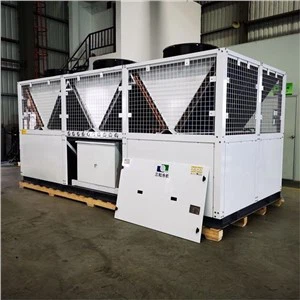
Hey there! As a heat exchanger supplier, I've been in the thick of the industry for quite some time, and I often get asked about the differences between liquid - liquid and gas - liquid heat exchangers. So, I thought I'd break it down in this blog post.
Let's start with the basics. A heat exchanger, as the name suggests, is a device that transfers heat from one fluid to another. The fluids can be liquids, gases, or a combination of both. The two main types we're going to focus on are liquid - liquid and gas - liquid heat exchangers.
Liquid - Liquid Heat Exchangers
Liquid - liquid heat exchangers are used when both the hot and cold fluids involved in the heat transfer process are liquids. These are pretty common in a variety of industries. For instance, in the chemical industry, they're used to cool down hot chemical solutions or heat up cold ones. In the food and beverage industry, they can be used for pasteurization, where milk or other liquids are heated to a certain temperature to kill bacteria and then cooled quickly.
One of the key advantages of liquid - liquid heat exchangers is their efficiency. Liquids generally have a higher heat capacity than gases, which means they can carry more heat energy. This allows for a more effective transfer of heat between the two fluids. Also, liquids are easier to handle and control in a heat exchanger system compared to gases. You can pump them through pipes more easily, and they don't expand or contract as much as gases do with changes in temperature and pressure.
There are different types of liquid - liquid heat exchangers. One popular type is the shell and tube heat exchanger. In this design, one liquid flows through a series of tubes, while the other liquid flows around the tubes in the shell. This provides a large surface area for heat transfer to occur. For example, our Seawater Shell and Tube Heat Exchanger is a great option for applications where seawater is one of the fluids. Seawater has unique properties, and this type of heat exchanger is designed to handle it effectively.
Another type is the plate heat exchanger. It consists of a series of thin plates that are stacked together. The two liquids flow through alternating channels between the plates. Plate heat exchangers are known for their compact size and high heat transfer efficiency. They're often used in applications where space is limited, such as in small industrial plants or in HVAC systems.
Gas - Liquid Heat Exchangers
Now, let's talk about gas - liquid heat exchangers. In these heat exchangers, one fluid is a gas, and the other is a liquid. These are commonly used in processes like air conditioning, refrigeration, and power generation.
In an air conditioning system, for example, a gas - liquid heat exchanger is used to cool down the hot refrigerant gas by transferring its heat to a liquid coolant. The refrigerant gas is compressed and then passed through the heat exchanger, where it releases its heat to the liquid. The cooled refrigerant then goes on to absorb heat from the indoor air, thus cooling the room.
One of the challenges with gas - liquid heat exchangers is that gases have a lower heat capacity than liquids. This means that a larger volume of gas is required to transfer the same amount of heat as a liquid. Also, gases are more difficult to handle because they're compressible. They can expand or contract significantly with changes in temperature and pressure, which can affect the performance of the heat exchanger.


There are different designs for gas - liquid heat exchangers as well. One type is the finned tube heat exchanger. In this design, the tubes that carry the liquid are equipped with fins on the outside. The fins increase the surface area available for heat transfer between the gas and the liquid. This helps to improve the heat transfer efficiency, even though the gas has a lower heat capacity.
Another important type is the evaporator. For example, our Flooded Type Shell and Tube Evaporator and U Type Evaporator are designed for specific gas - liquid heat transfer applications. In an evaporator, a liquid refrigerant is evaporated by absorbing heat from a gas. This is a crucial process in refrigeration and air conditioning systems.
Key Differences
Now that we've looked at both types of heat exchangers, let's summarize the key differences between liquid - liquid and gas - liquid heat exchangers.
Heat Capacity: As mentioned earlier, liquids have a higher heat capacity than gases. This means that liquid - liquid heat exchangers can transfer more heat per unit volume of fluid compared to gas - liquid heat exchangers.
Handling and Control: Liquids are easier to handle and control in a heat exchanger system. They can be pumped through pipes more easily, and their volume doesn't change as much with temperature and pressure changes. Gases, on the other hand, are compressible and require more complex control systems to maintain stable operation.
Design Complexity: Gas - liquid heat exchangers often require more complex designs to compensate for the lower heat capacity of gases. For example, finned tubes or special evaporator designs are used to increase the heat transfer surface area. Liquid - liquid heat exchangers can have relatively simpler designs, although there are also advanced designs available for high - efficiency applications.
Applications: Liquid - liquid heat exchangers are commonly used in industries where both fluids are liquids, such as chemical processing, food and beverage, and some industrial cooling applications. Gas - liquid heat exchangers are mainly used in air conditioning, refrigeration, and power generation, where there is a need to transfer heat between a gas and a liquid.
Conclusion
In conclusion, both liquid - liquid and gas - liquid heat exchangers play important roles in various industries. Understanding the differences between them is crucial for choosing the right heat exchanger for a specific application.
If you're in the market for a heat exchanger, whether it's a liquid - liquid or gas - liquid type, we've got you covered. Our team of experts can help you select the best heat exchanger based on your specific requirements. We offer a wide range of high - quality heat exchangers, including the ones I've mentioned in this post.
So, if you're interested in learning more or want to start a purchase negotiation, don't hesitate to reach out. We're here to provide you with the best solutions for your heat transfer needs.
References
- Incropera, F. P., DeWitt, D. P., Bergman, T. L., & Lavine, A. S. (2007). Fundamentals of Heat and Mass Transfer (6th ed.). Wiley.
- Shah, R. K., & Sekulic, D. P. (2003). Fundamentals of Heat Exchanger Design. Wiley.