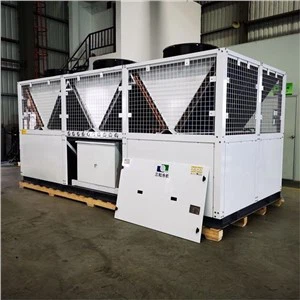
As a well - established heat exchanger supplier, I've had the privilege of working closely with a wide range of clients in various industries. Plate heat exchangers are a popular choice in many applications due to their high efficiency, compact design, and flexibility. However, like any technology, they come with their own set of limitations. In this blog post, I'll delve into the key limitations of plate heat exchangers to help you make more informed decisions when selecting the right heat transfer solution for your needs.
1. Limited Pressure and Temperature Resistance
One of the primary limitations of plate heat exchangers is their relatively limited ability to withstand high pressures and temperatures. The design of plate heat exchangers relies on gaskets or brazing to seal the plates together. Gasketed plate heat exchangers, in particular, are more vulnerable to pressure and temperature extremes.


Gaskets are typically made of elastomeric materials, which have a limited temperature range. At high temperatures, the gaskets can degrade, lose their elasticity, and start to leak. This not only reduces the efficiency of the heat exchanger but can also lead to safety hazards if the fluids being handled are hazardous. For example, in some industrial processes where steam at very high temperatures is used for heating, a gasketed plate heat exchanger might not be suitable.
Similarly, high - pressure applications can pose challenges. The plates in a plate heat exchanger are thin, and excessive pressure can cause deformation or even rupture of the plates. This is especially true for larger - sized plate heat exchangers, where the surface area exposed to pressure is greater. In comparison, Titanium Shell and Tube Evaporator can often handle much higher pressures and temperatures due to their robust shell - and - tube construction.
2. Fouling and Scaling Issues
Fouling is another significant limitation of plate heat exchangers. Fouling occurs when deposits build up on the heat transfer surfaces, reducing the efficiency of heat transfer. These deposits can be made up of various substances such as minerals, biological matter, or particles in the fluid.
The narrow channels between the plates in a plate heat exchanger can make them more prone to fouling compared to other types of heat exchangers. Once fouling starts, it can quickly spread and block the flow of fluids through the channels. This not only reduces the heat transfer coefficient but also increases the pressure drop across the heat exchanger, which in turn requires more energy to pump the fluids.
Scaling is a specific type of fouling that occurs when dissolved minerals in the fluid precipitate out and form a hard layer on the heat transfer surfaces. For example, in water - based systems, calcium and magnesium salts can form scale when the water is heated. This scale can be very difficult to remove and can significantly degrade the performance of the plate heat exchanger over time. Regular cleaning and maintenance are required to prevent fouling and scaling, which can be time - consuming and costly. In contrast, U Type Evaporator may have a more open design that is less prone to fouling in some applications.
3. Limited Fluid Compatibility
Plate heat exchangers may have limited compatibility with certain types of fluids. The materials used for the plates and gaskets need to be carefully selected based on the chemical properties of the fluids being handled.
Some aggressive chemicals can corrode the plates or degrade the gaskets. For instance, strong acids or alkalis can react with the metal plates, causing pitting or general corrosion. This not only shortens the lifespan of the heat exchanger but can also contaminate the fluids being processed.
In addition, fluids with high viscosity can also pose problems. The narrow channels in a plate heat exchanger can cause a high pressure drop when handling viscous fluids, which may require a more powerful pump to maintain the flow. This increases the energy consumption and operating costs. A Seawater Shell and Tube Heat Exchanger is often designed with materials that are more resistant to the corrosive nature of seawater, making it a better choice for applications involving seawater compared to a plate heat exchanger.
4. Difficulties in Repair and Maintenance
Repairing and maintaining plate heat exchangers can be more challenging compared to other types of heat exchangers. In a gasketed plate heat exchanger, if a gasket fails, it often requires disassembling the entire unit to replace the gasket. This can be a time - consuming process, especially in large - scale industrial applications where downtime needs to be minimized.
Moreover, accessing the internal parts of a plate heat exchanger for inspection and cleaning can be difficult. The plates are tightly packed together, and special tools and techniques are required to disassemble and reassemble the unit. In some cases, if a plate is damaged, it may be necessary to replace the entire plate pack, which can be expensive.
In contrast, shell - and - tube heat exchangers are generally easier to maintain. Individual tubes can be inspected, cleaned, or replaced without having to disassemble the entire unit. This makes them a more practical choice in applications where quick and easy maintenance is crucial.
5. Limited Size and Capacity
Plate heat exchangers are typically more suitable for smaller - to - medium - sized applications. As the size of a plate heat exchanger increases, the challenges related to pressure resistance, fouling, and manufacturing complexity also increase.
Larger plate heat exchangers require more plates, which means more gaskets (in the case of gasketed units) or a more complex brazing process. This increases the risk of leaks and reduces the overall reliability of the unit. In addition, the handling and installation of large plate heat exchangers can be more difficult due to their size and weight.
For large - scale industrial processes that require high heat transfer capacities, shell - and - tube heat exchangers are often a better choice. They can be designed to handle large volumes of fluids and have a higher heat transfer capacity compared to plate heat exchangers.
Conclusion
While plate heat exchangers offer many advantages such as high efficiency and compact design, they also have several limitations that need to be carefully considered. These limitations include limited pressure and temperature resistance, fouling and scaling issues, limited fluid compatibility, difficulties in repair and maintenance, and limited size and capacity.
As a heat exchanger supplier, I understand that choosing the right heat transfer solution is crucial for the success of your project. By being aware of the limitations of plate heat exchangers, you can make a more informed decision and select the heat exchanger that best suits your specific requirements. If you have any questions or need further advice on heat exchanger selection, please don't hesitate to contact us for a detailed discussion and to explore the best heat transfer solutions for your application.
References
- Incropera, F. P., DeWitt, D. P., Bergman, T. L., & Lavine, A. S. (2007). Fundamentals of Heat and Mass Transfer. John Wiley & Sons.
- Kakac, S., & Liu, H. (2002). Heat Exchangers: Selection, Rating, and Thermal Design. CRC Press.