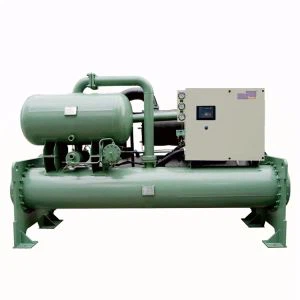
Hey there! As a supplier of water-cooled screw chillers, I often get asked about how to check the refrigerant level in these chillers. It's a crucial aspect of maintaining the efficiency and longevity of your chiller, so I'm here to break it down for you in a simple and easy-to-understand way.
First off, why is checking the refrigerant level so important? Well, the refrigerant is like the lifeblood of your chiller. It absorbs heat from the water being cooled and releases it outside. If the refrigerant level is too low, the chiller won't be able to cool the water effectively, leading to reduced performance and potentially higher energy costs. On the other hand, if the level is too high, it can put unnecessary stress on the compressor and other components, increasing the risk of breakdowns.
Now, let's get into the steps of checking the refrigerant level.
Step 1: Gather the Necessary Tools
Before you start, you'll need a few tools. These include a set of refrigerant gauges, which are used to measure the pressure of the refrigerant in the system. You'll also need a thermometer to measure the temperature of the refrigerant and the water. Make sure your tools are in good working condition and calibrated correctly.
Step 2: Locate the Service Ports
Most water-cooled screw chillers have service ports where you can connect your gauges. These ports are usually located on the suction and discharge lines of the compressor. Refer to your chiller's manual to find the exact location of the service ports.
Step 3: Connect the Gauges
Once you've located the service ports, carefully connect the refrigerant gauges. The blue gauge is for the low-pressure side (suction line), and the red gauge is for the high-pressure side (discharge line). Make sure the connections are tight to prevent any refrigerant leaks.
Step 4: Take Pressure Readings
With the gauges connected, turn on the chiller and let it run for a few minutes to stabilize. Then, take readings from both the low-pressure and high-pressure gauges. The readings will give you an idea of the pressure of the refrigerant in the system. Compare these readings to the manufacturer's specifications for your chiller. If the readings are outside the recommended range, it could indicate a refrigerant problem.


Step 5: Measure the Temperature
While the chiller is running, use your thermometer to measure the temperature of the refrigerant at the service ports and the temperature of the water entering and leaving the chiller. The temperature difference between the refrigerant and the water can also provide valuable information about the refrigerant level.
Step 6: Analyze the Results
Once you have your pressure and temperature readings, it's time to analyze them. If the pressure readings are too low, it could mean that there is a refrigerant leak or that the system is undercharged. If the pressure readings are too high, it could indicate an overcharge or a problem with the condenser. The temperature readings can help you confirm these suspicions. For example, if the temperature of the refrigerant is too high, it could be a sign of an overcharge.
Step 7: Take Action
Based on your analysis, you'll need to take appropriate action. If you suspect a refrigerant leak, you'll need to locate and repair the leak before adding more refrigerant. If the system is undercharged or overcharged, you'll need to adjust the refrigerant level accordingly. It's important to note that adding or removing refrigerant should be done by a qualified technician to ensure safety and compliance with regulations.
Tips and Precautions
- Always wear appropriate safety gear, such as gloves and goggles, when working with refrigerants.
- Make sure the chiller is turned off and the power is disconnected before you start working on it.
- Follow the manufacturer's instructions and safety guidelines at all times.
- If you're not comfortable performing these checks yourself, it's best to hire a professional technician.
As a supplier of Water Cooled Heat Reclaim Chiller, Industrial Chiller Machine, and Water Cooled Screw Compressor Chiller, we understand the importance of proper maintenance and refrigerant management. Our chillers are designed to be reliable and efficient, but regular checks and maintenance are still essential to keep them running at their best.
If you have any questions about checking the refrigerant level in your water-cooled screw chiller or if you're interested in purchasing a new chiller, please don't hesitate to contact us. We're here to help you find the right solution for your cooling needs.
References
- Manufacturer's manuals for water-cooled screw chillers
- Refrigerant industry standards and guidelines