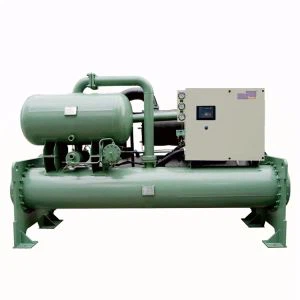
Hey there! As a supplier of industrial use mini chillers, I often get asked about the maximum cooling capacity of these little powerhouses. So, I thought I'd take a deep dive into this topic and share what I've learned over the years.
First off, let's talk about what an industrial use mini chiller is. These are compact cooling systems designed for industrial applications where space is limited but cooling is still crucial. They're used in a wide range of industries, from plastics manufacturing to food processing, and even in some medical equipment.
Now, when it comes to the maximum cooling capacity of the smallest industrial use mini chiller, it's not a one - size - fits - all answer. There are several factors that can affect this, such as the type of compressor used, the refrigerant, and the overall design of the chiller.
The compressor is the heart of the chiller. In mini chillers, you'll often find scroll compressors. Scroll compressors are known for their efficiency and reliability. They work by using two interleaving scrolls to compress the refrigerant gas. The smaller the chiller, the more limited the size of the compressor, which in turn affects the cooling capacity.


Refrigerant also plays a big role. Different refrigerants have different heat - transfer properties. For example, R - 410A is a commonly used refrigerant in many modern chillers. It has a high cooling capacity and is more environmentally friendly compared to some older refrigerants. However, the choice of refrigerant also depends on factors like the operating temperature range and the regulatory requirements in different regions.
The design of the chiller, including the heat exchanger and the fan, also impacts the cooling capacity. A well - designed heat exchanger can transfer heat more efficiently, allowing the chiller to cool more effectively. And a powerful fan can help with the dissipation of heat, which is essential for maintaining the chiller's performance.
So, what's the ballpark figure for the maximum cooling capacity of the smallest industrial use mini chiller? Generally speaking, the smallest ones can have a cooling capacity starting from around 1 - 2 kilowatts (kW). This might not seem like a lot, but for small - scale industrial processes, it can be just enough. For example, in a small plastics manufacturing setup, a mini chiller with a 1 - 2 kW cooling capacity can be used to cool the molds during the injection molding process. This helps to ensure that the plastic parts are formed correctly and have a high quality finish.
As you move up in size, you can find mini chillers with cooling capacities of up to 5 - 10 kW. These can be used in more demanding applications, such as cooling the motors in small blow - molding machines.
If you're in the plastic industry, you might be interested in our Plastic Industrial Air Cooled Scroll Chiller. It's designed specifically for the unique cooling needs of plastic manufacturing processes. And for those using blow - molding machines, our Air to Water Chiller for Blow Molding Machine is a great option. It provides efficient cooling to keep your machines running smoothly. Also, check out our Air Cooled Scroll Chiller for Plastic Industry, which offers reliable performance in plastic - related applications.
When choosing a mini chiller, it's important to consider your specific requirements. You need to know the heat load of your process, which is the amount of heat that needs to be removed. This can be calculated based on factors like the power consumption of the equipment, the operating temperature, and the production rate.
Another important factor is the ambient temperature. If your chiller is going to be operating in a hot environment, it will have to work harder to achieve the same cooling effect. So, you might need a chiller with a slightly higher cooling capacity to compensate for the high ambient temperature.
Maintenance is also crucial for getting the most out of your chiller. Regularly cleaning the filters, checking the refrigerant levels, and inspecting the compressor and other components can help extend the lifespan of the chiller and ensure that it maintains its maximum cooling capacity.
In some cases, you might be able to get a custom - built mini chiller. This can be a great option if your cooling requirements are very specific. You can work with a supplier to design a chiller that meets your exact needs in terms of cooling capacity, size, and other features.
If you're in the market for an industrial use mini chiller, don't hesitate to reach out. We have a wide range of mini chillers to choose from, and our team of experts can help you find the right one for your application. Whether you're a small - scale manufacturer or a large industrial facility, we can provide you with the cooling solution you need.
In conclusion, the maximum cooling capacity of the smallest industrial use mini chiller can vary depending on several factors. But with the right choice and proper maintenance, these mini chillers can provide reliable and efficient cooling for a variety of industrial processes. So, if you're looking to improve the performance of your industrial equipment through effective cooling, we're here to help. Contact us today to start the conversation about finding the perfect mini chiller for your business.
References:
- ASHRAE Handbook of Refrigeration
- Manufacturer's specifications of various mini chillers
- Industry reports on industrial cooling systems