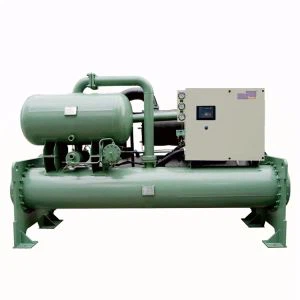
As a supplier of air - cooled scroll chillers, I've witnessed firsthand the importance of understanding the factors that affect their efficiency. Air - cooled scroll chillers are widely used in various industries, including the plastic industry, general industrial applications, and laser cooling. In this blog, I'll explore the key factors that can impact the efficiency of these chillers, and I'll also provide some insights on how to optimize their performance.
1. Ambient Temperature
One of the most significant factors affecting the efficiency of an air - cooled scroll chiller is the ambient temperature. Air - cooled chillers rely on the surrounding air to dissipate heat. When the ambient temperature is high, the temperature difference between the refrigerant in the condenser and the ambient air decreases. This makes it more difficult for the chiller to reject heat, leading to a decrease in efficiency.
For example, in a hot summer day with an ambient temperature of 35°C, the chiller has to work harder to cool the refrigerant compared to a cooler day with an ambient temperature of 20°C. As the ambient temperature rises, the compressor has to consume more power to maintain the desired cooling capacity. This results in higher energy consumption and lower efficiency.
To mitigate the impact of high ambient temperatures, proper installation is crucial. The chiller should be installed in a well - ventilated area with sufficient clearance around it to allow for proper air circulation. Additionally, some advanced air - cooled scroll chillers are equipped with variable - speed fans. These fans can adjust their speed according to the ambient temperature and the cooling demand, improving the chiller's efficiency in different environmental conditions.
2. Refrigerant Charge
The refrigerant charge in an air - cooled scroll chiller is another critical factor. If the refrigerant charge is too low, the chiller will not be able to transfer heat effectively. This can lead to reduced cooling capacity and increased energy consumption. On the other hand, an over - charged refrigerant system can cause excessive pressure in the condenser, which also reduces the chiller's efficiency and can potentially damage the compressor.
Regular maintenance and refrigerant level checks are essential to ensure the proper refrigerant charge. Professional technicians should use the appropriate tools to measure the refrigerant level and adjust it as needed. They also need to check for any refrigerant leaks, as even a small leak can gradually reduce the refrigerant charge over time.
3. Compressor Performance
The compressor is the heart of an air - cooled scroll chiller. Its performance directly affects the chiller's efficiency. Scroll compressors are known for their reliability and energy - efficiency compared to other types of compressors. However, several factors can impact the performance of a scroll compressor.
One factor is the compressor's wear and tear. Over time, the moving parts in the compressor can experience friction and wear, which can reduce its efficiency. Regular maintenance, including lubrication and inspection of the compressor, can help prolong its lifespan and maintain its performance.
Another factor is the compressor's capacity control. Some air - cooled scroll chillers are equipped with single - speed compressors, while others have variable - capacity compressors. Variable - capacity compressors can adjust their capacity according to the cooling demand, which is more energy - efficient than single - speed compressors. For example, during periods of low cooling demand, a variable - capacity compressor can operate at a lower capacity, consuming less power.
4. Condenser and Evaporator Fouling
The condenser and evaporator are two important heat exchangers in an air - cooled scroll chiller. Fouling of these heat exchangers can significantly reduce the chiller's efficiency.
In the condenser, dirt, dust, and debris can accumulate on the fins, blocking the air flow and reducing the heat transfer rate. This makes it more difficult for the refrigerant to release heat to the ambient air. Similarly, in the evaporator, scale, algae, and other contaminants can build up on the heat transfer surfaces, reducing the heat absorption rate from the chilled water.
Regular cleaning of the condenser and evaporator is necessary to prevent fouling. For the condenser, the fins can be cleaned using compressed air or a soft brush. For the evaporator, chemical cleaning may be required to remove scale and other deposits.
5. Water Quality (if applicable)
In some air - cooled scroll chillers, water is used as a secondary coolant in the evaporator. The quality of the water can have a significant impact on the chiller's efficiency.
Hard water, which contains high levels of calcium and magnesium ions, can cause scale formation in the evaporator. Scale acts as an insulator, reducing the heat transfer rate and increasing the energy consumption of the chiller. Additionally, water with a high level of impurities can cause corrosion and fouling in the chiller's components.


To ensure good water quality, water treatment systems can be installed. These systems can remove impurities, adjust the pH level, and prevent scale formation. Regular water quality testing is also necessary to monitor the condition of the water and make adjustments to the water treatment system as needed.
6. System Design and Installation
The design and installation of the air - cooled scroll chiller system play a crucial role in its efficiency. A well - designed system takes into account the specific cooling requirements of the application, the layout of the installation site, and the environmental conditions.
Proper pipe sizing is essential to ensure the smooth flow of refrigerant and chilled water. Undersized pipes can cause excessive pressure drops, increasing the energy consumption of the chiller. On the other hand, oversized pipes can lead to inefficient heat transfer.
The location of the chiller also matters. As mentioned earlier, it should be installed in a well - ventilated area. The orientation of the chiller can also affect its performance. For example, if the chiller is installed in direct sunlight, it will absorb more heat, reducing its efficiency.
Applications and Our Product Offerings
Our company offers a wide range of air - cooled scroll chillers for different applications. For the plastic industry, we have Air Cooled Scroll Chiller for Plastic Industry. These chillers are designed to meet the specific cooling requirements of plastic processing machines, such as injection molding machines and extruders. They can provide precise temperature control, which is essential for producing high - quality plastic products.
In general industrial applications, our Industrial Air Cooled Scroll Chillers are suitable for a variety of processes, including metalworking, food processing, and pharmaceutical manufacturing. These chillers are built with high - quality components and advanced control systems to ensure reliable and efficient operation.
For laser cooling applications, we offer Air Cooled Scroll Type Laser Chiller. Lasers generate a large amount of heat, and precise temperature control is crucial for their performance and lifespan. Our laser chillers can provide stable and accurate cooling to ensure the optimal operation of lasers.
Conclusion
In conclusion, several factors can affect the efficiency of an air - cooled scroll chiller, including ambient temperature, refrigerant charge, compressor performance, heat exchanger fouling, water quality, and system design and installation. By understanding these factors and taking appropriate measures to optimize them, users can improve the efficiency of their air - cooled scroll chillers, reduce energy consumption, and lower operating costs.
If you are interested in our air - cooled scroll chillers or have any questions about their performance and application, please feel free to contact us for a detailed discussion. We are committed to providing high - quality products and professional technical support to meet your cooling needs.
References
- ASHRAE Handbook - HVAC Systems and Equipment. American Society of Heating, Refrigerating and Air - Conditioning Engineers.
- Refrigeration and Air Conditioning Technology, 8th Edition. William C. Whitman, William M. Johnson, John Tomczyk, and Eugene Silberstein.
- Chiller Efficiency Best Practices Guide. U.S. Department of Energy.