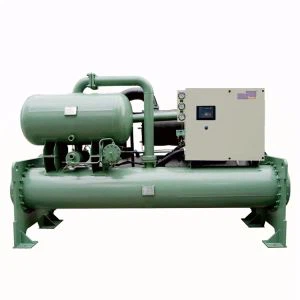
As a seasoned supplier of Screw Water Chillers, I understand that the successful installation of a screw water chiller is not solely reliant on the quality of the chiller itself. The installation foundation plays a pivotal role in ensuring the long - term performance, stability, and safety of the chiller. In this blog, I will delve into the key requirements for the installation foundation of a screw water chiller.
1. Load - Bearing Capacity
One of the most fundamental requirements for the installation foundation is its ability to bear the weight of the screw water chiller. Screw water chillers come in various sizes and capacities, and each has a specific weight. Before installation, it is crucial to calculate the total weight of the chiller, including its components such as the compressor, condenser, evaporator, and any additional accessories.
The foundation must be designed to support this weight without experiencing excessive settlement or deformation. For example, larger industrial - grade screw water chillers, like our Industrial Water - cooled Screw Chiller Single Compressor, which are often used in large - scale manufacturing plants or commercial buildings, can be quite heavy. A weak foundation may lead to uneven loading on the chiller, causing stress on its components and potentially leading to premature failure.
To determine the appropriate load - bearing capacity, engineers typically consider factors such as the soil type at the installation site. Soft or unstable soils may require additional reinforcement, such as deep foundations or soil improvement techniques, to ensure the foundation can support the chiller's weight.
2. Levelness
Levelness is another critical requirement for the installation foundation. A screw water chiller must be installed on a perfectly level surface. Even a slight tilt can have significant consequences for the chiller's operation.
When the chiller is not level, the refrigerant flow within the system can be disrupted. This can lead to inefficient heat transfer in the evaporator and condenser, reducing the chiller's cooling capacity. Additionally, an unlevel chiller can cause excessive vibration in the compressor, which not only shortens the compressor's lifespan but also generates noise.
To achieve the required levelness, precision leveling tools are used during the installation process. The foundation should be within a tolerance of a few millimeters over the entire surface area where the chiller will be placed. Our technicians are trained to ensure that every Water Cooled Screw Liquid Chiller we install meets the strict levelness requirements.
3. Vibration Isolation
Screw water chillers generate vibrations during operation due to the movement of the compressor and other rotating components. These vibrations can be transmitted to the surrounding structure if not properly isolated. Excessive vibration can cause structural damage to the building, as well as create a noisy environment.
Therefore, the installation foundation should incorporate vibration isolation measures. This can be achieved through the use of vibration isolators, which are typically made of rubber or spring materials. These isolators absorb and dampen the vibrations generated by the chiller, preventing them from being transferred to the building structure.
For our Double Compressor Water Cooled Screw Chiller, which has two compressors and may generate more vibrations compared to single - compressor models, proper vibration isolation is even more crucial. The isolators should be selected based on the chiller's size, weight, and vibration characteristics.
4. Corrosion Resistance
The installation foundation may be exposed to various environmental factors, such as moisture, chemicals, and temperature fluctuations. These factors can cause corrosion of the foundation materials over time. A corroded foundation can compromise its structural integrity and the stability of the chiller.
To ensure the longevity of the foundation, corrosion - resistant materials should be used. For example, if the foundation is made of concrete, additives can be incorporated to increase its resistance to moisture and chemical attack. In areas with high humidity or exposure to corrosive substances, a protective coating can be applied to the foundation surface.


This is especially important for screw water chillers installed in industrial environments where they may be exposed to chemicals or in coastal areas where the air contains salt. By using corrosion - resistant materials, we can ensure that the foundation remains stable and supports the chiller effectively throughout its service life.
5. Accessibility and Space Requirements
The installation foundation should also provide sufficient space for the chiller and allow for easy access for maintenance and servicing. There should be enough clearance around the chiller for technicians to perform routine inspections, repairs, and component replacements.
In addition, proper ventilation space is required around the chiller to ensure efficient heat dissipation. Blocked ventilation can cause the chiller to overheat, reducing its performance and potentially leading to system failures.
When designing the foundation, it is essential to consider the future expansion or modification of the chiller system. Allowing for some extra space can save time and cost in the long run if the need for upgrading the chiller arises.
6. Compliance with Local Codes and Standards
Finally, the installation foundation must comply with all local building codes and standards. These codes are in place to ensure the safety and reliability of the installation. They cover aspects such as structural design, fire safety, and environmental protection.
Before installing a screw water chiller, it is necessary to obtain the required permits and approvals from the local authorities. Our company has extensive experience in working with local regulations and can assist our customers in ensuring that the installation foundation meets all the necessary requirements.
In conclusion, the installation foundation of a screw water chiller is a critical aspect of the overall installation process. By meeting the requirements of load - bearing capacity, levelness, vibration isolation, corrosion resistance, accessibility, and compliance with local codes, we can ensure that the chiller operates efficiently and reliably for many years.
If you are in the market for a high - quality screw water chiller and need professional advice on installation foundation requirements, please feel free to contact us. Our team of experts is ready to assist you in making the right choice and ensuring a smooth installation process.
References
- ASHRAE Handbook - HVAC Systems and Equipment. American Society of Heating, Refrigerating and Air - Conditioning Engineers.
- Building Code Requirements for Structural Concrete (ACI 318). American Concrete Institute.