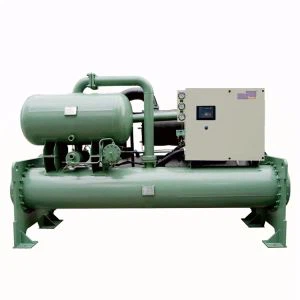
In the realm of industrial heat transfer, shell-and-tube heat exchangers stand as a cornerstone technology, facilitating the efficient transfer of thermal energy between two fluids. As a seasoned Heat Exchanger supplier, I've witnessed firsthand the critical role that various design parameters play in optimizing the performance of these devices. One such parameter that significantly influences heat transfer is the tube pitch. In this blog post, we'll delve into the intricate relationship between tube pitch and heat transfer in shell-and-tube heat exchangers, exploring how this seemingly simple design choice can have far-reaching implications for efficiency and performance.
Understanding Tube Pitch
Before we dive into the impact of tube pitch on heat transfer, let's first clarify what tube pitch actually means. In a shell-and-tube heat exchanger, the tube pitch refers to the center-to-center distance between adjacent tubes in the tube bundle. It is typically expressed in terms of a ratio relative to the tube outer diameter (OD). For example, a tube pitch of 1.25 means that the center-to-center distance between adjacent tubes is 1.25 times the tube OD.
There are two main types of tube pitch arrangements commonly used in shell-and-tube heat exchangers: square pitch and triangular pitch. In a square pitch arrangement, the tubes are arranged in a grid pattern with equal spacing between rows and columns. This configuration provides a relatively open flow path for the shell-side fluid, allowing for easy cleaning and maintenance. On the other hand, a triangular pitch arrangement places the tubes in a staggered pattern, maximizing the number of tubes that can be packed into a given shell diameter. This results in a higher heat transfer surface area per unit volume, making triangular pitch arrangements more compact and efficient.
Impact of Tube Pitch on Heat Transfer Coefficient
The heat transfer coefficient is a key parameter that quantifies the rate of heat transfer between the two fluids in a heat exchanger. It is influenced by a variety of factors, including the fluid properties, flow rates, and the geometry of the heat exchanger. The tube pitch plays a crucial role in determining the heat transfer coefficient by affecting the flow pattern and turbulence level of the shell-side fluid.
In general, a smaller tube pitch leads to a higher heat transfer coefficient. This is because a smaller pitch increases the number of tubes per unit volume, resulting in a larger heat transfer surface area. Additionally, the closer spacing between tubes promotes more intimate contact between the shell-side fluid and the tube surface, enhancing the convective heat transfer process. As the fluid flows through the narrow channels between the tubes, it experiences higher velocities and greater turbulence, which further improves the heat transfer efficiency.
However, reducing the tube pitch also has its drawbacks. A smaller pitch can lead to increased pressure drop across the shell side of the heat exchanger. This is because the narrow flow channels create more resistance to the fluid flow, requiring a higher pumping power to maintain the desired flow rate. In some cases, the increased pressure drop may offset the benefits of the higher heat transfer coefficient, resulting in a less efficient overall system.
Effect of Tube Pitch on Shell-Side Flow Distribution
Another important aspect to consider when evaluating the impact of tube pitch on heat transfer is the shell-side flow distribution. The tube pitch arrangement can significantly affect how the shell-side fluid is distributed across the tube bundle, which in turn influences the heat transfer performance.
In a square pitch arrangement, the shell-side fluid tends to flow more evenly across the tube bundle, resulting in a more uniform heat transfer rate. This is because the open flow paths between the tubes allow the fluid to move freely and distribute itself evenly. However, the relatively large spacing between tubes can also lead to some bypassing of the fluid, where a portion of the fluid flows around the tube bundle without effectively participating in the heat transfer process.
In contrast, a triangular pitch arrangement promotes a more tortuous flow path for the shell-side fluid, increasing the mixing and turbulence level. This helps to reduce the bypassing effect and improve the overall heat transfer efficiency. However, the staggered arrangement of the tubes can also create regions of low flow velocity and stagnant zones, where the heat transfer rate may be lower. To mitigate this issue, proper design and optimization of the shell-side baffles are often required to ensure a more uniform flow distribution.
Considerations for Tube Pitch Selection
When selecting the appropriate tube pitch for a shell-and-tube heat exchanger, several factors need to be taken into account. These include the specific application requirements, the fluid properties, the desired heat transfer rate, and the allowable pressure drop.


For applications where a high heat transfer rate is the primary concern and the pressure drop is not a significant constraint, a smaller tube pitch and a triangular pitch arrangement may be preferred. This can help to maximize the heat transfer surface area and enhance the convective heat transfer process. However, for applications where the pressure drop is a critical factor, such as in systems with limited pumping power, a larger tube pitch and a square pitch arrangement may be more suitable.
It's also important to consider the ease of maintenance and cleaning when selecting the tube pitch. A larger tube pitch provides more space between the tubes, making it easier to access and clean the tube bundle. This is particularly important in applications where fouling or scaling is a concern, as regular cleaning is necessary to maintain the heat transfer performance.
Our Heat Exchanger Solutions
As a leading Heat Exchanger supplier, we offer a wide range of shell-and-tube heat exchangers designed to meet the diverse needs of our customers. Our heat exchangers are available in various tube pitch arrangements and configurations, allowing us to optimize the design for specific applications.
Whether you're looking for a Titanium Shell and Tube Evaporator for a corrosive environment, a Flooded Type Shell and Tube Evaporator for efficient refrigeration applications, or a Shell and Tube Condenser Heat Exchanger for industrial processes, we have the expertise and experience to provide you with the right solution.
Our team of engineers and technicians works closely with our customers to understand their specific requirements and design heat exchangers that deliver optimal performance and reliability. We use advanced simulation and modeling techniques to optimize the tube pitch and other design parameters, ensuring that our heat exchangers meet or exceed the customer's expectations.
Conclusion
In conclusion, the tube pitch is a critical design parameter that has a significant impact on the heat transfer performance of shell-and-tube heat exchangers. By carefully selecting the appropriate tube pitch and arrangement, it is possible to optimize the heat transfer coefficient, improve the shell-side flow distribution, and achieve the desired balance between heat transfer efficiency and pressure drop.
As a Heat Exchanger supplier, we understand the importance of providing our customers with high-quality heat exchangers that are designed to meet their specific needs. Whether you're looking to improve the efficiency of an existing system or design a new heat exchanger from scratch, we're here to help. Contact us today to discuss your requirements and learn more about our heat exchanger solutions.
References
- Incropera, F. P., & DeWitt, D. P. (2002). Fundamentals of Heat and Mass Transfer. John Wiley & Sons.
- Shah, R. K., & Sekulic, D. P. (2003). Fundamentals of Heat Exchanger Design. John Wiley & Sons.
- Kakac, S., & Liu, H. (2002). Heat Exchangers: Selection, Rating, and Thermal Design. CRC Press.