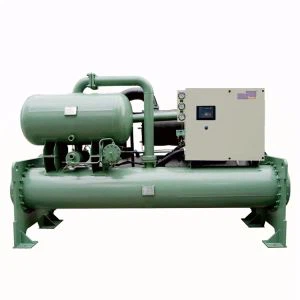
Hey there! I'm part of a heat exchanger supplier team, and I'm super stoked to chat with you about how heat exchangers can play a massive role in sustainable development. In today's world, where we're all trying to be more eco - friendly and cut down on waste, heat exchangers are like unsung heroes.
First off, let's get a basic understanding of what heat exchangers are. They're devices that transfer heat from one fluid to another without the two fluids actually mixing. It's like a cool middle - man that helps move heat around efficiently. There are different types, such as the Flooded Type Shell and Tube Evaporator, Shell and Tube Evaporator Heat Exchanger, and U Type Evaporator. Each type has its own unique features and uses, but they all share the common goal of heat transfer.
One of the biggest ways heat exchangers contribute to sustainable development is through energy efficiency. You know, a lot of industries use a ton of energy to heat or cool things. For example, in a manufacturing plant, they might need to heat a large amount of water for a process. Without a heat exchanger, they'd have to use a whole bunch of extra energy to keep that water at the right temperature. But with a heat exchanger, they can take the heat from a waste stream, like hot exhaust gases, and transfer it to the water. This means they don't have to use as much fresh energy from sources like coal or natural gas.
Let's take a closer look at some real - world scenarios. In the food and beverage industry, heat exchangers are used to pasteurize milk. Instead of heating the milk from scratch every time, the heat exchanger can use the heat from the already - pasteurized milk to pre - heat the incoming raw milk. This cuts down on the energy needed to reach the pasteurization temperature. It's a win - win situation. The industry saves money on energy bills, and at the same time, it reduces its carbon footprint.
Another area where heat exchangers shine is in the power generation sector. Power plants, especially those that use steam turbines, generate a lot of waste heat. This waste heat is usually released into the environment, which is not only a waste of energy but can also have a negative impact on the local ecosystem. Heat exchangers can capture this waste heat and use it for other purposes. For instance, it can be used to heat nearby buildings or to pre - heat the water that goes into the boiler. This not only makes the power plant more efficient but also reduces the overall energy demand in the area.
In the transportation industry, heat exchangers are also crucial. In cars, they're used in the engine cooling system. By efficiently transferring the heat from the engine to the coolant, the engine can run at an optimal temperature. This improves fuel efficiency because a well - cooled engine doesn't have to work as hard. And as we all know, better fuel efficiency means less fuel consumption and fewer emissions.
Now, let's talk about water conservation. Heat exchangers can also play a big role in this area. In many industrial processes, water is used as a coolant. Without a heat exchanger, a large amount of water would be continuously used and then discharged as wastewater. But with a heat exchanger, the water can be cooled and reused. This reduces the demand for fresh water and also cuts down on the amount of wastewater that needs to be treated.
For example, in a chemical plant, a heat exchanger can cool the hot process fluids using water. After the heat transfer, the water can be cooled again and recirculated back into the system. This not only saves water but also reduces the cost associated with water treatment and disposal.
Heat exchangers also contribute to sustainable development by extending the lifespan of equipment. When a system operates at an optimal temperature, the wear and tear on the equipment are reduced. For example, in a refrigeration system, a well - functioning heat exchanger ensures that the compressor doesn't have to work as hard. This means the compressor is less likely to break down, and it will last longer. As a result, less equipment needs to be replaced, which reduces the consumption of raw materials and the amount of waste generated.
In addition, the use of heat exchangers can also lead to the development of more sustainable technologies. As the demand for energy - efficient and eco - friendly solutions grows, researchers and engineers are constantly looking for ways to improve heat exchanger design. This has led to the development of new materials and manufacturing techniques that make heat exchangers more efficient, durable, and environmentally friendly.
For instance, some new heat exchangers are made from materials that are more resistant to corrosion. This means they can last longer in harsh environments without the need for frequent replacements. Also, advanced manufacturing techniques allow for more precise designs, which can improve the heat transfer efficiency even further.
As a heat exchanger supplier, we're really excited about the potential of heat exchangers in sustainable development. We're constantly working on improving our products to meet the changing needs of our customers and the environment. We offer a wide range of heat exchangers, including the Flooded Type Shell and Tube Evaporator, Shell and Tube Evaporator Heat Exchanger, and U Type Evaporator.
If you're interested in learning more about how our heat exchangers can help your business become more sustainable, or if you want to discuss a specific application, don't hesitate to reach out. We're here to help you make the most of this amazing technology and contribute to a greener future. Whether you're in the manufacturing, food and beverage, power generation, or any other industry, we've got a solution for you.
In conclusion, heat exchangers are an essential part of sustainable development. They offer energy efficiency, water conservation, equipment longevity, and the potential for new technological advancements. By using heat exchangers, businesses can reduce their environmental impact, save money, and contribute to a more sustainable world. So, if you're looking for ways to make your operations more eco - friendly, consider investing in a high - quality heat exchanger from us.
References


- "Heat Exchangers: Selection, Rating, and Thermal Design" by Sadik Kakac and Hongtan Liu
- "Principles of Heat Transfer" by Frank Kreith and Mark Bohn
- Industry reports on energy efficiency and sustainable development in various sectors.