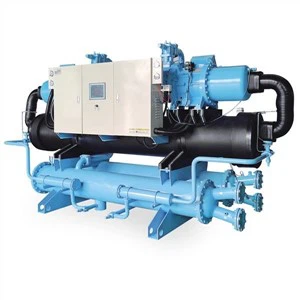
The operating principle of the industrial chiller is mainly to use wind energy to complete the cooling effect. Now the chiller products are widely used in various enterprises. What is the planning situation of industrial chiller products?
Most of the planning of industrial chiller products will use reliable quality parts, which can better guarantee the service life of chiller products. Many chillers are better compressors, load balancing principle, the main bearing planning life is up to 100,000 hours, and energy stepless scheduling.
Unit configuration of industrial chiller: equipped with single-chip control system, built-in compressor dry filter over and expansion valve, maintenance hand valve interface and other devices, to ensure that the machine is reliable and safe to travel and convenient maintenance and repair.
The industrial chiller multi-function operation panel is equipped with ammeter, control system insurance, compressor switch button, water pump switch button, electronic temperature controller, various safety and protection fault lights, unit start running indicator light, easy to operate and convenient to use. Industrial chiller unit configuration: equipped with a single-chip control system, built-in compressor drying and expansion valve, maintenance hand valve interface and other devices to ensure reliable and safe operation of the machine, convenient maintenance and repair.
Industrial chiller installation requirements
1. Before installing the freezer, please choose a stable foundation, open space, smooth and avoid corrosion, pollution, sun, rain, convenient installation and maintenance;
2. Select a matching cooling tower according to the refrigeration capacity of the freezer. The piping of the chiller piping should be installed according to the size of the fuselage. Do not reduce the size of the cooling water pipe, which will cause high voltage overload, affect the cooling effect and increase the power consumption;
3. The air-cooled freezer must be installed at a distance of more than 1m from the wall to avoid causing high-temperature overload to affect the cooling effect and increase power consumption.