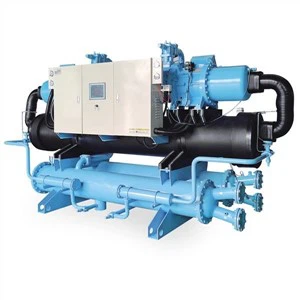
Alright, let's cut through the noise. If you're supplying equipment to HVAC, refrigeration, chemical plants, or breweries, you know one piece of kit shows up everywhere: the shell-and-tube heat exchanger. It's not sexy tech, but it's the absolute backbone of thermal management. Forget fancy gimmicks-this is where reliability lives.
What Is It
Picture a heavy-duty metal shell (think: a stout pipe) packed with a bundle of smaller tubes inside. One fluid runs through the tubes, another flows around them inside the shell. They never mix, but heat jumps between them like magic. That's it. No moving parts, no complex electronics-just brute-force heat transfer. It's the industrial equivalent of a radiator on steroids.

Why We Need These
Let's be real: if a process involves heating, cooling, condensing, or evaporating, this exchanger is probably doing the heavy lifting. Here's why it's non-negotiable:
- Handles the Tough Stuff: Oils, chemicals, high-pressure steam, aggressive refrigerants? No problem. While plate heat exchangers gag on sludge or high temps, shell-and-tube units laugh it off.
- Pressure King: Need to handle 300+ psi steam or volatile refrigerants? The robust cylindrical shell design eats pressure for breakfast.
- Scale Without the Headache: From small brewery chillers (think ~13 kW) to massive industrial condensers pushing nearly 1 MW, the design scales effortlessly. That SANHE condenser range (13.2–967.2 kW)? Classic example.
- Durability You Can Bet On: When built right (more on that below), these things outlast the equipment around them. We're talking decades, not years.
What Makes a Good One
Baffles Done Right: Those metal plates forcing fluid across the tubes? They better be spaced correctly. Too few = poor heat transfer. Too many = pressure drop hell.
Tube Bundles You Can Actually Service: If you can't pull the bundle out for cleaning or tube replacement, walk away. Scaling and fouling will happen.
The Bottom Line
Look, plate heat exchangers have their place-they're compact and efficient for clean fluids. But when the going gets tough, the tough use shell-and-tube. Here's why your customers keep coming back:
- Survivalists: They handle abuse (pressure spikes, dirty fluids, temperature swings) that would destroy fancier designs.
- Fixable, Not Throwaway: A blown gasket or a few plugged tubes? Fix it in a day. A failed plate pack? Often means a whole new unit.
- Versatility is Their Middle Name: Condensing steam? Cooling hydraulic oil? Preheating feedstock? Chilling wort? One design, a million uses.