Heat exchangers are essential components in various industrial processes, from power generation to chemical manufacturing. They play a crucial role in transferring heat between two or more fluids, ensuring efficient operation and energy conservation. As a heat exchanger supplier, I've witnessed firsthand the impact of different factors on heat transfer performance. One such factor that often goes unnoticed but can significantly influence heat transfer is the surface roughness of the heat exchanger.
Understanding Heat Transfer in Heat Exchangers
Before delving into the effects of surface roughness, it's important to understand the basic principles of heat transfer in heat exchangers. There are three main modes of heat transfer: conduction, convection, and radiation. In most heat exchangers, conduction and convection are the dominant modes.
Conduction occurs when heat is transferred through a solid material, such as the walls of the heat exchanger tubes. The rate of conduction depends on the thermal conductivity of the material, the temperature difference across the material, and the thickness of the material.
Convection, on the other hand, involves the transfer of heat between a fluid and a solid surface. This can be further divided into forced convection, where the fluid is forced to flow over the surface by a pump or a fan, and natural convection, where the fluid flow is driven by density differences caused by temperature variations.
The Role of Surface Roughness in Heat Transfer
Surface roughness refers to the irregularities on the surface of the heat exchanger tubes or plates. These irregularities can be in the form of micro - grooves, bumps, or scratches. While a smooth surface may seem ideal for reducing friction and promoting laminar flow, a certain degree of surface roughness can actually enhance heat transfer.
Enhanced Turbulence
One of the primary ways surface roughness affects heat transfer is by promoting turbulence in the fluid flow. When a fluid flows over a rough surface, the irregularities disrupt the smooth laminar flow and create small eddies and vortices. These turbulent flow patterns increase the mixing of the fluid near the surface, bringing warmer fluid closer to the cooler surface and vice versa. As a result, the temperature boundary layer, which acts as a barrier to heat transfer, becomes thinner, allowing for more efficient heat transfer between the fluid and the surface.
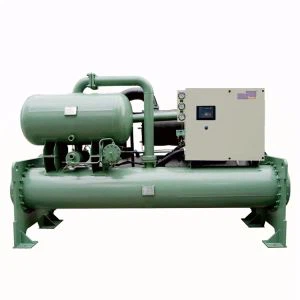
For example, in a Shell and Tube Condenser Heat Exchanger, the refrigerant flows inside the tubes, and the cooling water flows outside the tubes. A rough tube surface can enhance the heat transfer coefficient between the refrigerant and the tube wall, improving the overall condensation efficiency.
Increased Surface Area
Surface roughness also effectively increases the surface area available for heat transfer. The micro - grooves and bumps on the rough surface provide additional contact points between the fluid and the solid, allowing for more heat to be transferred. This is particularly beneficial in applications where the heat transfer area is limited.
In a Titanium Shell and Tube Evaporator, the rough surface of the tubes can increase the evaporation rate of the refrigerant by providing more surface area for the liquid - vapor phase change to occur.
Fouling Resistance
Another advantage of a rough surface is its potential to resist fouling. Fouling is the accumulation of unwanted materials, such as scale, rust, or biological growth, on the heat exchanger surface. These deposits can act as an insulating layer, reducing the heat transfer efficiency. A rough surface can disrupt the formation of a continuous fouling layer, making it more difficult for the deposits to adhere to the surface.
Factors Affecting the Impact of Surface Roughness
The effect of surface roughness on heat transfer is not always straightforward and can be influenced by several factors.


Fluid Properties
The properties of the fluid, such as its viscosity, density, and thermal conductivity, play a significant role in determining the impact of surface roughness. For highly viscous fluids, the flow may be more laminar, and the effect of surface roughness on turbulence generation may be limited. In contrast, for low - viscosity fluids, even a small degree of surface roughness can lead to significant turbulence and enhanced heat transfer.
Flow Velocity
The velocity of the fluid flowing over the surface also affects the influence of surface roughness. At low flow velocities, the fluid may not have enough energy to overcome the resistance caused by the surface irregularities, and the heat transfer enhancement may be minimal. As the flow velocity increases, the turbulent flow becomes more pronounced, and the benefits of surface roughness become more apparent.
Roughness Characteristics
The size, shape, and distribution of the surface irregularities also matter. Different types of roughness, such as periodic or random roughness, can have different effects on heat transfer. Additionally, the height and spacing of the irregularities need to be optimized for a specific application to achieve the maximum heat transfer enhancement.
Measuring and Controlling Surface Roughness
As a heat exchanger supplier, we need to be able to measure and control the surface roughness of our products. There are several methods for measuring surface roughness, including profilometry, which uses a stylus to trace the surface and measure the height variations, and optical methods, such as laser scanning, which can provide a non - contact and more detailed measurement of the surface topography.
Controlling the surface roughness during the manufacturing process is also crucial. Various manufacturing techniques, such as machining, grinding, and chemical etching, can be used to create the desired surface roughness. By carefully selecting the manufacturing process and parameters, we can ensure that our heat exchangers have the optimal surface roughness for the intended application.
Applications and Case Studies
In the power generation industry, heat exchangers are used to transfer heat from the steam to the cooling water in the condenser. By using heat exchangers with optimized surface roughness, power plants can improve the efficiency of the condenser, reducing the energy consumption and increasing the overall power output.
In the chemical industry, heat exchangers are used for various processes, such as heating, cooling, and distillation. A Shell and Tube Evaporator Heat Exchanger with a rough surface can enhance the evaporation process, leading to more efficient separation of different chemical components.
Conclusion
The surface roughness of a heat exchanger is a critical factor that can significantly affect heat transfer performance. By promoting turbulence, increasing the surface area, and resisting fouling, an appropriate level of surface roughness can enhance the efficiency of heat exchangers in various applications.
As a heat exchanger supplier, we are committed to providing high - quality heat exchangers with optimized surface roughness. Our team of experts can work with you to understand your specific requirements and recommend the most suitable heat exchanger design. Whether you need a Shell and Tube Condenser Heat Exchanger, a Titanium Shell and Tube Evaporator, or a Shell and Tube Evaporator Heat Exchanger, we have the expertise and the technology to meet your needs.
If you are interested in learning more about our heat exchanger products or would like to discuss a specific project, please feel free to contact us. We look forward to working with you to achieve efficient and reliable heat transfer solutions.
References
- Incropera, F. P., & DeWitt, D. P. (2002). Fundamentals of Heat and Mass Transfer. John Wiley & Sons.
- Kakaç, S., & Liu, H. (2002). Heat Exchangers: Selection, Rating, and Thermal Design. CRC Press.
- Bergles, A. E. (1998). Enhancement of Single - Phase Heat Transfer. In Handbook of Heat Transfer (pp. 11 - 1 - 11 - 72). John Wiley & Sons.