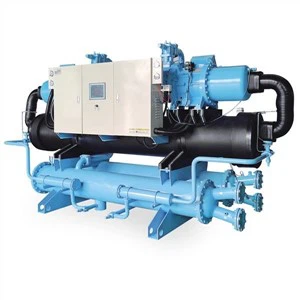
In the world of precision manufacturing, the Clean Room Air Conditioner stands as a critical component in maintaining a dust-free and contaminant-free environment. Its role is not just to regulate temperature but to ensure the highest levels of air purity, crucial for the successful production of semiconductors, pharmaceuticals, and other delicate products. Let's delve into the intricacies of the Clean Room Air Conditioner and understand how it contributes to creating an optimal manufacturing environment.
Firstly, the working principle of a Clean Room Air Conditioner is based on a combination of high-efficiency filtering and controlled air circulation. The air conditioner is equipped with filters that trap particles such as dust, bacteria, and other contaminants, ensuring that only clean air circulates within the clean room. Additionally, the air conditioner maintains a constant temperature and humidity level, vital for preventing any thermal expansion or contraction that could affect the precision of the manufacturing process.
The Clean Room Air Conditioner finds widespread application in industries that require a high degree of cleanliness and precision. Semiconductor manufacturing, for instance, relies heavily on clean rooms to protect sensitive wafers from dust and other impurities. Similarly, the pharmaceutical industry utilizes clean rooms to ensure the sterility of drugs and vaccines during production. Other industries such as aerospace, nanotechnology, and medical device manufacturing also benefit greatly from the use of Clean Room Air Conditioners.
The design and manufacturing of a Clean Room Air Conditioner involve meticulous engineering and the use of high-quality materials. The filters, for instance, are typically made of synthetic fibers or glass fibers that are capable of trapping even the smallest particles. The air conditioner's housing is also designed to be easy to clean and maintain, ensuring its long-term effectiveness.
Evaluating the performance of a Clean Room Air Conditioner is crucial for ensuring its effectiveness. Key performance indicators include the airflow rate, filter efficiency, temperature stability, and humidity control. Manufacturers often provide data on these metrics, allowing users to assess the suitability of a particular model for their specific needs.
Lastly, the maintenance and care of a Clean Room Air Conditioner are essential for its optimal performance. Regular cleaning and replacement of filters are necessary to maintain the air quality within the clean room. Additionally, periodic inspections and maintenance by qualified personnel can help identify and address any potential issues before they become significant problems.