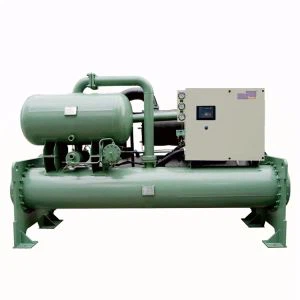
Hey there! As a supplier of Water-cooled Screw Chillers, I've been in the thick of it, dealing with all sorts of questions about these amazing machines. One question that pops up a lot is about the function of the high- and low-pressure switches in a water-cooled screw chiller. So, let's dive right in and break it down!
First off, let's talk a bit about water-cooled screw chillers. These bad boys are used in a ton of different applications. Whether you're running a big commercial building, need cooling for a concrete mixing plant, or have some other industrial cooling needs, water-cooled screw chillers are up to the task. You can check out more about different types of chillers on our website: Screw Compressor Chiller, Commercial Water Cooled Chiller, and Water Cooled Screw Chiller for Concrete Mix.
Now, let's get to the high- and low-pressure switches. These switches are like the guardians of your chiller. They play a crucial role in keeping the chiller running smoothly and safely.
The High-Pressure Switch
The high-pressure switch is there to protect the chiller from over-pressurization. In a water-cooled screw chiller, the refrigerant goes through a cycle. It gets compressed by the screw compressor, and this compression raises the pressure of the refrigerant. Under normal circumstances, the pressure stays within a certain range. But sometimes, things can go wrong.
For example, if there's a problem with the condenser. The condenser is responsible for removing heat from the refrigerant. If it's dirty, clogged, or there's an issue with the water flow through it, the refrigerant can't release heat properly. This causes the pressure to build up. If the pressure gets too high, it can damage the compressor, the pipes, and other components of the chiller.
That's where the high-pressure switch comes in. When the pressure in the system reaches a pre-set limit, the high-pressure switch kicks in. It sends a signal to stop the compressor. This is a safety measure to prevent any serious damage to the chiller. Once the pressure drops back to a safe level, the switch can be reset, and the chiller can start running again.
Another situation where the high-pressure switch is important is if there's an overcharge of refrigerant. If too much refrigerant is added to the system, it can also cause the pressure to spike. The high-pressure switch will detect this and shut down the compressor to avoid any problems.
The Low-Pressure Switch
On the other hand, the low-pressure switch is all about protecting the chiller from under-pressurization. There are a few reasons why the pressure in the chiller system might drop too low.
One common reason is a refrigerant leak. If there's a leak in the system, the amount of refrigerant decreases. With less refrigerant in the system, the pressure drops. A low-pressure situation can cause the compressor to run dry. The refrigerant also acts as a lubricant for the compressor. Without enough refrigerant, the compressor can overheat and wear out quickly.
The low-pressure switch monitors the pressure in the system. When the pressure falls below a certain level, it shuts down the compressor. This gives you a chance to find and fix the leak and recharge the refrigerant if necessary.
Another reason for low pressure could be a blockage in the evaporator. The evaporator is where the refrigerant absorbs heat from the water or air that needs to be cooled. If it gets blocked, the refrigerant can't flow properly, and the pressure drops. The low-pressure switch will detect this and stop the compressor to prevent damage.
Importance of Proper Calibration
Both the high- and low-pressure switches need to be calibrated correctly. If the high-pressure switch is set too high, it might not kick in soon enough to prevent damage from over-pressurization. On the other hand, if it's set too low, the chiller might shut down unnecessarily, causing disruptions in your cooling process.
The same goes for the low-pressure switch. If it's set too low, it might not detect a dangerous drop in pressure early enough. And if it's set too high, it could cause false alarms and unnecessary shutdowns.
Regular maintenance of the chiller includes checking and adjusting these switches to make sure they're working properly. This helps to ensure the long-term reliability and efficiency of the chiller.


Real-World Impact
Let's think about how these switches affect your day-to-day operations. In a commercial building, a water-cooled screw chiller is responsible for keeping the indoor environment comfortable. If the high- or low-pressure switch malfunctions, the chiller could stop working. This means no cooling, which can lead to unhappy customers, employees, and a negative impact on your business.
In an industrial setting, like a concrete mixing plant, the chiller is used to cool the water used in the mixing process. If the chiller goes down due to a pressure issue, it can disrupt the production process, cause delays, and even affect the quality of the concrete.
Wrapping It Up
So, in a nutshell, the high- and low-pressure switches in a water-cooled screw chiller are essential for the safety and proper functioning of the system. They protect the chiller from over- and under-pressurization, which can cause serious damage to the components. By monitoring the pressure and shutting down the compressor when necessary, these switches help to prevent costly repairs and keep your chiller running smoothly.
If you're in the market for a water-cooled screw chiller or need any help with the maintenance of your existing chiller, don't hesitate to reach out. We're here to provide you with the best products and support to meet your cooling needs. Whether you're looking for a Screw Compressor Chiller, a Commercial Water Cooled Chiller, or a Water Cooled Screw Chiller for Concrete Mix, we've got you covered. Let's have a chat and see how we can work together to keep your cooling systems in top shape!
References
- ASHRAE Handbook - Refrigeration. American Society of Heating, Refrigerating and Air-Conditioning Engineers.
- Refrigeration and Air Conditioning Technology. William C. Whitman, William M. Johnson, John Tomczyk, Eugene Silberstein.