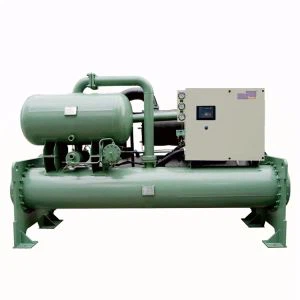
Hey there! As a heat exchanger supplier, I've seen firsthand how ambient temperature can have a huge impact on the performance of these crucial pieces of equipment. In this blog post, I'm gonna break down how ambient temperature affects heat exchangers and why it's so important to consider when you're choosing the right one for your needs.
First off, let's talk about what a heat exchanger actually does. Simply put, a heat exchanger is a device that transfers heat from one fluid to another. This can be used in a wide range of applications, from heating and cooling buildings to industrial processes. There are different types of heat exchangers out there, like Seawater Shell and Tube Heat Exchanger, Titanium Shell and Tube Evaporator, and Shell and Tube Evaporator Heat Exchanger. Each type has its own unique features and is designed for specific applications.
Now, let's get into how ambient temperature comes into play. The ambient temperature is basically the temperature of the surrounding environment where the heat exchanger is installed. This can vary a lot depending on the location and the time of year. For example, if you're in a hot desert climate, the ambient temperature can be extremely high during the day, while in a cold mountainous area, it can drop to freezing at night.
One of the main ways ambient temperature affects a heat exchanger is through its impact on the heat transfer rate. The heat transfer rate is the amount of heat that can be transferred from one fluid to another in a given amount of time. In general, the greater the temperature difference between the two fluids, the higher the heat transfer rate. So, when the ambient temperature is very high, the temperature difference between the hot and cold fluids in the heat exchanger may be reduced. This means that the heat transfer rate will also go down, and the heat exchanger won't be able to transfer heat as efficiently.
On the other hand, when the ambient temperature is very low, it can also cause problems. Cold ambient temperatures can lead to issues like freezing of the fluids inside the heat exchanger. If the fluid freezes, it can block the flow channels and damage the heat exchanger. Additionally, the materials of the heat exchanger may become more brittle in cold temperatures, increasing the risk of cracks and leaks.


Let's take a closer look at some specific scenarios. In a cooling application, such as an air - conditioning system using a heat exchanger, a high ambient temperature can make it really tough for the heat exchanger to reject heat. The condenser part of the heat exchanger, which is responsible for releasing heat to the outside environment, has to work harder when the outside air is hot. This means that the compressor in the system has to work overtime to maintain the desired cooling effect. As a result, the energy consumption of the system goes up, and the overall efficiency drops. The system may also be more prone to breakdowns due to the increased stress on the components.
In an industrial process where a heat exchanger is used to heat a fluid, a low ambient temperature can slow down the heating process. The heat exchanger has to not only heat the fluid but also make up for the heat loss to the cold surrounding environment. This can lead to longer heating times and increased energy costs.
Another aspect to consider is the corrosion of the heat exchanger. High ambient temperatures can accelerate the corrosion process, especially if the environment is humid. Corrosion can damage the tubes and other components of the heat exchanger, reducing its lifespan and performance. Low ambient temperatures, on the other hand, can cause condensation inside the heat exchanger if there is a significant temperature difference between the internal and external surfaces. This condensation can also lead to corrosion over time.
So, what can you do to mitigate the effects of ambient temperature on your heat exchanger? Well, one option is to choose a heat exchanger that is designed to handle a wide range of ambient temperatures. Some heat exchangers come with special coatings or materials that are more resistant to high or low temperatures and corrosion. For example, titanium heat exchangers, like the Titanium Shell and Tube Evaporator, are known for their excellent corrosion resistance and can perform well in harsh environments.
Proper insulation is also crucial. By insulating the heat exchanger and the piping connected to it, you can reduce the heat loss or gain to the ambient environment. This helps to maintain a more stable temperature inside the heat exchanger and improves its efficiency.
Regular maintenance is another key factor. Inspecting the heat exchanger for signs of damage, corrosion, or blockages on a regular basis can help you catch any issues early and prevent major problems. Cleaning the heat exchanger to remove dirt and debris can also improve its performance.
As a heat exchanger supplier, I understand how important it is to choose the right heat exchanger for your specific ambient conditions. We offer a wide range of heat exchangers that are designed to meet different requirements. Whether you need a Seawater Shell and Tube Heat Exchanger for a marine application or a Shell and Tube Evaporator Heat Exchanger for an industrial process, we've got you covered.
If you're in the market for a heat exchanger and want to learn more about how to choose the best one for your ambient temperature conditions, don't hesitate to reach out. We're here to help you make an informed decision and ensure that your heat exchanger performs at its best.
In conclusion, ambient temperature plays a vital role in the performance of a heat exchanger. High or low ambient temperatures can affect the heat transfer rate, energy efficiency, and lifespan of the heat exchanger. By understanding these effects and taking appropriate measures, such as choosing the right heat exchanger, insulating it properly, and performing regular maintenance, you can minimize the negative impacts and get the most out of your heat exchanger.
References
- Incropera, F. P., DeWitt, D. P., Bergman, T. L., & Lavine, A. S. (2007). Fundamentals of Heat and Mass Transfer. Wiley.
- Kakaç, S., & Liu, H. (2002). Heat Exchangers: Selection, Rating, and Thermal Design. CRC Press.